
The Story
Why it exists.
The beginning
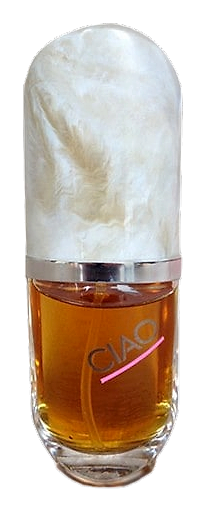
Givaudan built Ciao in 1980, a moment when perfumery was splitting between blockbuster florals and the emerging aquatic and green movements. The brief was clear: take the structural bones of a classic French chypre and push it somewhere warmer, spicier, and more personal. The name itself, Ciao, the Italian greeting that doubles as goodbye, suggests an intimacy that comes and goes, something encountered rather than performed. This wasn't a fragrance designed to fill a room. It was designed to be close.
What makes Ciao unusual is the way the spice and leather don't wait for the drydown, they're present from the opening, threading through the citrus and green notes like a low voice in a crowded space. The heart is densely floral: rose, jasmine, hyacinth, and carnation arranged in a classic pyramid that speaks to Houbigant's old-world technique. But it's the base that anchors everything: oakmoss and leather meeting sandalwood and vetiver, with benzoin adding a warm resinous swell underneath. The result is a chypre that feels earthy and personal rather than formal and grand, the kind of fragrance that rewards someone who leans in.
The evolution
The first twenty minutes are all about contrast. Lemon and basil arrive crisp and green, but underneath them the cumin is already leaning close, not aggressive, just present, like spice on warm skin. The green notes recede as the florals step forward: a dense bouquet of rose, hyacinth, and carnation that feels lush without being sweet. The transition into the base is gradual. Oakmoss and leather arrive together, the leather warm and slightly animalic, the moss giving it that characteristic earthy depth. Sandalwood and benzoin take over around the fourth hour, and the cumin that opened everything lingers longest, a quiet signature that says the fragrance was here. By the sixth hour, it's skin-close and intimate, the kind of drydown you find when you lift your wrist to your face without thinking.
Cultural impact
Ciao arrived in 1980 as a counterpoint to the sweet florals and emerging aquatics defining women's fragrance at the time. Where competitors leaned into brightness and reach, Ciao chose intimacy and complexity, a spicy, leathery chypre that asked something of the wearer. It speaks to a specific kind of taste: someone who finds the obvious path less interesting than the side door.