
The Story
Why it exists.
The beginning
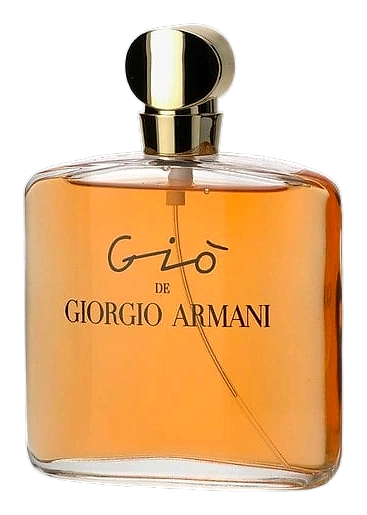
Francoise Caron created Giò in 1992, naming it after Giorgio Armani's own nickname, Giò, short for Giorgio. The brief was simple in concept, difficult in execution: capture the Armani woman. Not her wardrobe, not her silhouette, her essence. The composition was built around white florals, with a structure that balances tenderness with unexpected depth. Launched by Cosmair, the fragrance brought a different kind of beauty to the market, one that communicated through subtlety rather than force. The result was a scent that felt both tender and unpredictable, with a complexity that rewards attention. It held its own in a crowded market without needing to shout, finding its audience through quiet conviction rather than aggressive marketing.
The note structure is unusually dense for a fragrance in this category. Multiple white florals, including tuberose, gardenia, and orange blossom, combine with ylang-ylang, iris, and myrrh to create a floral heart so layered it almost reads as a single material rather than a combination of separate elements. The spice comes from carnation and clove, which cut through the creaminess and prevent the composition from ever becoming overly sweet. This layering is what separates Giò from a standard white floral fragrance.
The evolution
The first hour is all about arrival. Bergamot and mandarin orange lift the composition, but hyacinth is doing the real work, green, almost mineral, the smell of stems cut fresh. Then the white florals take over, and this is where Giò earns its reputation. Tuberose and gardenia arrive together, creamy and immediate, with carnation and clove adding warmth underneath. The sillage is strong from the start. By hour three, the green edge has softened and the composition has entered its heart phase: rich, warm, intimate. Sandalwood and vanilla arrive around hour five, and the drydown that follows is where Giò becomes something you'll remember. Amber and musk create a base that lingers on skin, developing slowly over many hours. The fragrance evolves considerably from opening to drydown, with each phase offering distinct character rather than a flat, unchanging presence throughout its wear.
Cultural impact
Giò was described by the house as the essence of the Armani Woman, tender, innocent, unpredictable. The fragrance has a devoted following among those who discovered it and have never found a replacement. Its discontinuation has made it harder to source, but collectors and enthusiasts continue to seek it out. There is something about the way it captures a particular mood, a certain femininity that resonates differently than many contemporaries from the same era. For those who know it, it remains a touchstone, a reference point against which other white florals are measured.