
The Story
Why it exists.
The beginning
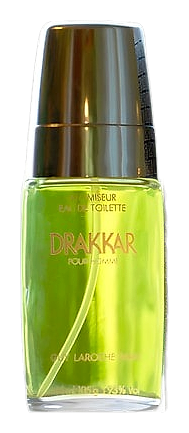
Guy Laroche launched Drakkar in 1972, expanding the house's reach from couture femininity into masculine territory. The name itself carries weight, suggesting something sharp, elemental, unapologetic. Where Fidji dressed the confident woman, Drakkar aimed at the man who moved through the world with similar certainty. It was a calculated extension of the house's core philosophy: strength without sacrifice, elegance that doesn't compromise.
The fougère structure, lavender anchoring a citrus top over an aromatic heart and mossy base, was the defining masculine accord of its era. Drakkar took that template and committed fully. Juniper and clary sage give the opening a herbal brightness that citrus amplifies. The heart layers angelica, pine, and rosemary into something that reads as clean but not sterile. Oakmoss in the base isn't decorative, it's the skeleton that keeps everything grounded.
The evolution
The opening hits immediately: citrus and lavender in equal measure, sharp and green. Mandarin orange and bergamot lift the top while clary sage adds an herbal counterpoint that keeps it from smelling like soap. Twenty minutes in, the heart takes over, coriander and basil introduce a spice that warms the composition, while jasmine and cedar start building the structure. The drydown is where Drakkar earns its reputation. Oakmoss arrives with that characteristic mossy-earthy quality, amber adds warmth, and musk and patchouli settle into skin. Six to eight hours later, you're still catching traces of it on your wrist.
Cultural impact
Drakkar arrived in 1972 as a statement of masculine confidence at a moment when men's fragrance was still finding its vocabulary. The fougère accord, lavender, oakmoss, and aromatic herbs, was the dominant masculine structure of the era, and Drakkar executed it with conviction. It didn't try to be soft or approachable. It wore its lavender loudly and its oakmoss proudly. The fragrance found its audience among men who wanted a scent that matched their ambition, not one that softened it.