The Story
Why it exists.
The beginning
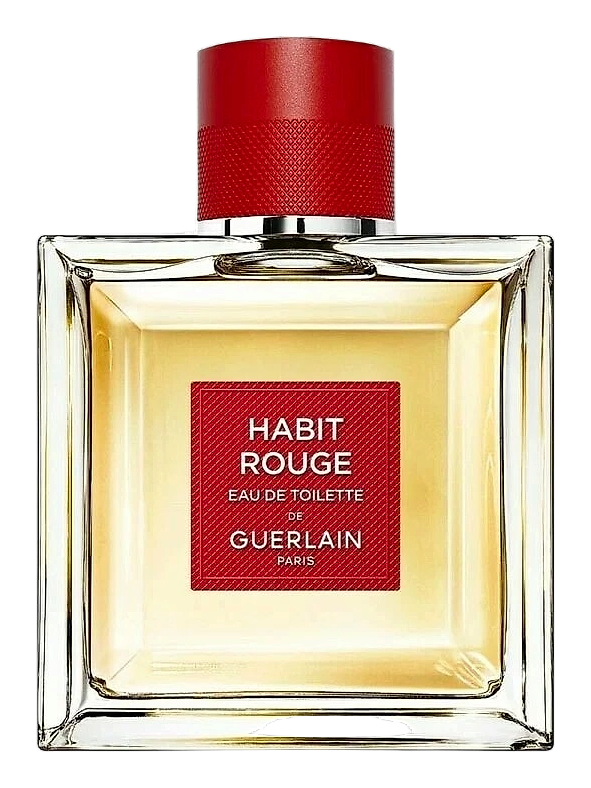
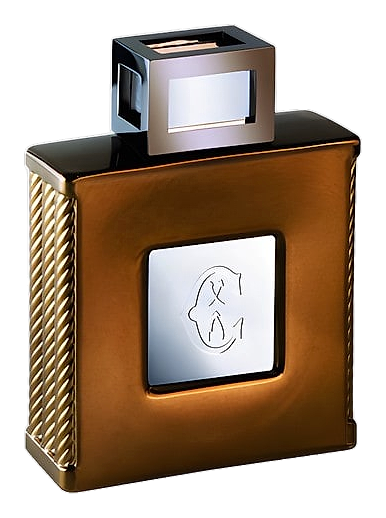
Habit Rouge Armoiries arrived in 2006 as part of a numbered limited collection, 454 flacons, each 240 ml, engraved with Guerlain's historic logo. The house created this as a collector's statement: a reinterpretation of the house's masculine identity through the lens of heritage craft and heraldic tradition. The name refers to coats of arms, to lineage, to something passed down rather than discovered. This was not a fragrance for browsing. It was a fragrance for people who already knew.
What makes the Armoiries composition unusual within the Habit Rouge lineage is its insistence on rich, dark leather as the organizing principle rather than an accent. Where the 1965 original leaned into amber warmth, this 2006 edition builds from bright citrus and neroli into a cedar-and-leather heart that reads as formal, almost regal. The oud and patchouli appear in the base not to modernize but to recall, Guerlain's old-world signature, preserved under glass and numbered for whoever would appreciate it. The fragrance carries itself with the confidence of something that has earned its place.
The evolution
The opening hits bright and immediate: orange and bergamot cutting through, lime adding a sharp green edge, neroli bringing a subtle floral whisper beneath the citrus. The brightness holds for some time before the middle notes arrive with intention. Cedar and leather move in together, the leather taking center stage with a richness that is smooth rather than harsh, the cedar grounding it with dry woody warmth. Cinnamon threads through, adding spice without heat. Then the handoff to the base. Patchouli anchors the composition with earthy weight, while vanilla arrives to sweeten the leather without softening it. The agarwood and amber build slowly, creating a warmth that settles close to skin. The drydown holds Guerlain's characteristic depth, something that reads as old world, as familiar, as belonging to a house rather than a moment.
Cultural impact
Habit Rouge Armoiries occupies an unusual position in the Guerlain catalog, not a commercial release but a statement piece, limited to 454 numbered flacons. It attracted collectors from the moment it appeared, less for its novelty than for its fidelity to Guerlain's house character. The rich leather and oud-driven drydown mark it as deliberately unhashionable in the best sense, a fragrance that trusted its own house identity over trend. There is something about wearing a numbered flacon that changes the relationship with a scent, making it feel less like wearing perfume and more like carrying a small piece of the house's history.
The House
GuerlainGuerlain stands as one of the oldest and most revered perfume houses in the world, founded in Paris in 1828 by Pierre-François-Pascal Guerlain. What began as a boutique on rue de Rivoli quickly became the preferred destination for Parisian society, attracting dandies and elegant women who sought custom-crafted fragrances. The house's influence grew to such heights that Guerlain earned the title of Official Perfumer to Napoleon III after presenting Eau de Cologne Impériale to Empress Eugénie as a wedding gift in 1853. This royal patronage marked the beginning of Guerlain's enduring association with European aristocracy, as the house went on to create fragrances for Queen Victoria and Queen Isabella II of Spain. Today, under the creative direction of Thierry Wasser, the fifth-generation perfumer, Guerlain continues to shape the landscape of fine fragrance with a portfolio spanning over 1,100 olfactory creations. The house remains headquartered at its legendary Champs-Élysées mansion, a historic monument that anchors Guerlain's position at the intersection of heritage and contemporary luxury.
The Creator
Jean-Paul GuerlainJean-Paul Guerlain's style resists easy categorization, though richness and depth define nearly every composition. He favored opulent oriental structures, warm woods and resins, and florals treated with almost sculptural precision.