The Story
Why it exists.
The beginning
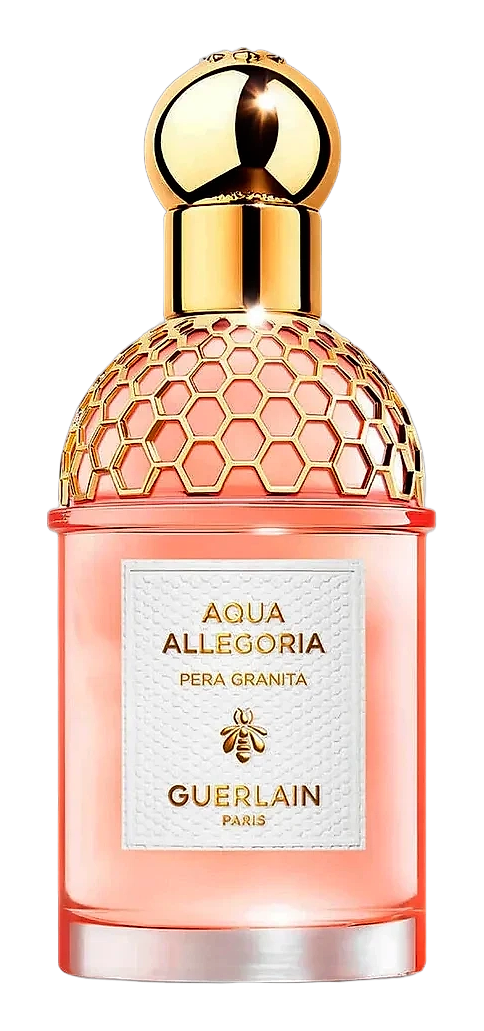
Thierry Wasser designed Passiflora for the Aqua Allegoria line in 2018. The collection is Guerlain's exploration of bright, citrus-forward compositions, modern and accessible interpretations of the house's classical expertise. Passiflora takes its name from the passion flower, and Wasser translated that tropical reference into something genuinely refreshing: not a beach cliché, but the precise sensation of dawn light on cool water and ripe fruit. The fragrance is built around the idea of waking up, tasting something sunny, and jumping in.
What makes Passiflora interesting is what it refuses to do. No heavy woods, no vanilla warmth, no drydown that changes everything. Instead: a composition that opens bright and stays bright, with the passion fruit note giving the citrus something to play against. The ylang-ylang adds a creamy floral layer beneath the tropical sweetness. White musk anchors the drydown with something clean and close. It's linear, but not shallow, and it holds attention longer than expected.
The evolution
The opening is immediate and clear. Citrus notes, bergamot, grapefruit, mandarin, lemon, arrive with aldehydic sparkle, like light hitting water. The passion fruit doesn't try to overpower; it sweetens the citrus without making the composition sticky. As the heart develops, the aquatic notes keep things cool and the ylang-ylang adds a tropical floral layer that deepens the sweetness. The transition from citrus to tropical is smooth, almost seamless. The drydown is white musk, quiet, clean, close to the skin. It doesn't project aggressively after the first two hours. On fabric, the citrus and passion fruit combination can last eight hours or more. On skin, the full arc is six to eight hours before the musk becomes a whisper. By evening, only the memory remains.
Cultural impact
Passiflora sits comfortably in the Guerlain lineup as an entry point to the house, a fragrance that invites exploration without demanding commitment. For newcomers, it's a way to wear Guerlain without the weight of their richer compositions. For established fans, it's a daily ritual fragrance that delivers quality without complexity. The tropical-citrus-aquatic combination has broad appeal, making it a reliable recommendation for anyone seeking something fresh and uncomplicated.
The House
GuerlainGuerlain stands as one of the oldest and most revered perfume houses in the world, founded in Paris in 1828 by Pierre-François-Pascal Guerlain. What began as a boutique on rue de Rivoli quickly became the preferred destination for Parisian society, attracting dandies and elegant women who sought custom-crafted fragrances. The house's influence grew to such heights that Guerlain earned the title of Official Perfumer to Napoleon III after presenting Eau de Cologne Impériale to Empress Eugénie as a wedding gift in 1853. This royal patronage marked the beginning of Guerlain's enduring association with European aristocracy, as the house went on to create fragrances for Queen Victoria and Queen Isabella II of Spain. Today, under the creative direction of Thierry Wasser, the fifth-generation perfumer, Guerlain continues to shape the landscape of fine fragrance with a portfolio spanning over 1,100 olfactory creations. The house remains headquartered at its legendary Champs-Élysées mansion, a historic monument that anchors Guerlain's position at the intersection of heritage and contemporary luxury.
The Creator
Thierry WasserWasser gravitates toward green, crispy notes and the bold florals Guerlain is known for. Bulgarian rose appears repeatedly in his work, and he travels annually to oversee the harvest in Kazanlak.