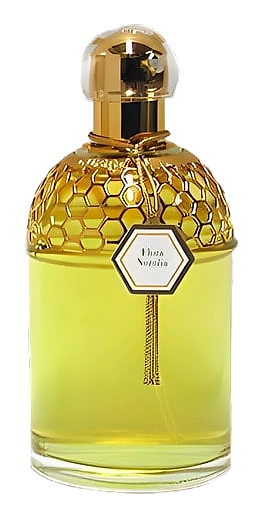

The Story
Why it exists.
The beginning
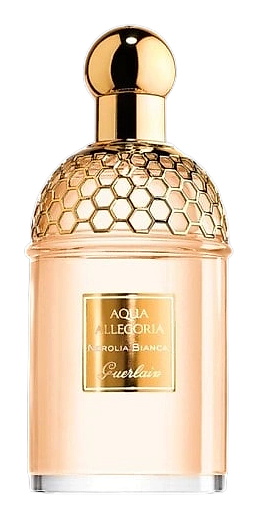
Jean-Paul Guerlain created Flora Nerolia in 2000 as part of the Aqua Allegoria collection, Guerlain's signature line of bright, garden-inspired eaux de toilette. The Aqua Allegoria series was conceived as olfactory portraits of specific flowers, each fragrance named for its dominant note. Flora Nerolia puts neroli front and center: the precious essential oil distilled from the blossoms of the bitter orange tree, long prized in perfumery for its rare combination of citrus brightness and floral warmth. Petitgrain, from the same tree's leaves and twigs, sharpens the opening with a green, almost bitter edge that makes the neroli feel alive rather than polished. The structure is deceptively simple, three layers, two notes per tier, but the composition carries Guerlain's unmistakable hand.
What makes Flora Nerolia unusual within the Aqua Allegoria line is the frankincense base. Resinous, clean, faintly smoky, frankincense is not a typical foundation for a bright floral fragrance, it adds a quiet depth that most neroli compositions lack. The result is a scent that doesn't just sit on the surface of the skin. Jasmine and orange blossom form a warm, classic heart, and the frankincense keeps them close rather than letting them float outward. This is not a projection fragrance. It's made for the hours after you've arrived, not the entrance. The minimalism is the point.
The evolution
The opening is immediate and crisp. Neroli and petitgrain arrive together, bright, green, faintly bitter, like crushing a citrus leaf between your fingers. The Petitgrain sharpens the neroli, keeping it from being sweet. For the first twenty minutes, this is a garden in sharp morning light. Then the heart takes over. Jasmine and orange blossom soften everything, turning the brightness into something warm and creamy. The florals don't shout, they settle, intimate and familiar, the way orange blossom always has. The drydown is where the frankincense arrives. Not smoky, not heavy, clean, resinous, close to the skin. The sillage stays moderate throughout, which is exactly right for this fragrance. It lasts through the workday and into the evening, lingering quietly where you applied it.
Cultural impact
Flora Nerolia has been quietly beloved since 2000, discontinued but not forgotten. Wearers return to it for the same reason they return to any Guerlain classic: the structure is flawless, the materials are real, and no other house quite does white florals this way. Neroli and orange blossom are common notes; the Guerlain hand is not.
The House
GuerlainGuerlain stands as one of the oldest and most revered perfume houses in the world, founded in Paris in 1828 by Pierre-François-Pascal Guerlain. What began as a boutique on rue de Rivoli quickly became the preferred destination for Parisian society, attracting dandies and elegant women who sought custom-crafted fragrances. The house's influence grew to such heights that Guerlain earned the title of Official Perfumer to Napoleon III after presenting Eau de Cologne Impériale to Empress Eugénie as a wedding gift in 1853. This royal patronage marked the beginning of Guerlain's enduring association with European aristocracy, as the house went on to create fragrances for Queen Victoria and Queen Isabella II of Spain. Today, under the creative direction of Thierry Wasser, the fifth-generation perfumer, Guerlain continues to shape the landscape of fine fragrance with a portfolio spanning over 1,100 olfactory creations. The house remains headquartered at its legendary Champs-Élysées mansion, a historic monument that anchors Guerlain's position at the intersection of heritage and contemporary luxury.
The Creator
Jean-Paul GuerlainJean-Paul Guerlain's style resists easy categorization, though richness and depth define nearly every composition. He favored opulent oriental structures, warm woods and resins, and florals treated with almost sculptural precision.