
The Story
Why it exists.
The beginning
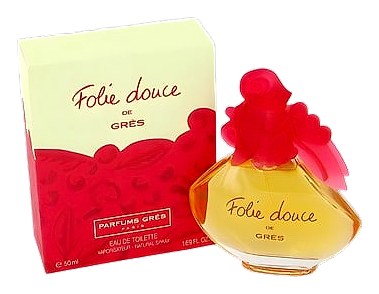
The name Folie Douce carries a certain lightness, a phrase that sounds like a contradiction until you smell it. The name suggests something that starts sensible and drifts, gently, into something else. Created in 1997 by Sophie Labbé and Nathalie Lorson, this is a fragrance built for that specific afternoon feeling: warm light, something sweet nearby, the sense that you could stay here a while longer. The name doesn't promise wildness. It promises the permission to drift. What inspired the composition itself? The sources stay quiet on the perfumers' explicit intent. But the notes paint a picture: blackcurrant and mimosa opening bright, heliotrope and ylang-ylang softening the middle, vanilla and sandalwood anchoring the base.
The combination of blackcurrant with mimosa is unusual. Blackcurrant brings a sharp, slightly sour fruitiness, think the difference between a berry and a blossom. Mimosa is warm, honeyed, yellow. Together they create an opening that is fruity but not sweet, bright but not sharp. It's the tension that makes Folie Douce interesting. Heliotrope is the real move here. It has an almond-like quality that borders on medicinal in heavy doses, but in Folie Douce it's used gently, a soft powdery effect that makes everything around it feel wrapped. Ylang-ylang adds tropical sweetness, a richness that keeps the powder from going flat.
The evolution
The opening hits bright, blackcurrant first, that tart berry bite that wakes things up. Mimosa arrives quickly, softening the edges. Lemon adds a brief citrus spark, almost like light through a window. This initial burst gives way as the fruitiness begins to recede. The heart takes over gradually. Heliotrope emerges first, that almond-powder softness that becomes Folie Douce's signature. Iris follows, adding its violet-like dustiness. Ylang-ylang keeps the warmth alive underneath. The bay leaf becomes more apparent here, green, slightly herbal, a counter to all that softness. It feels like the moment an afternoon deepens: still warm, but with shadows. The base is warm and close. Vanilla and sandalwood together create a creamy sweetness, but restrained. Cedar adds structure, a dry woodiness that prevents the base from going fully soft. Musk keeps everything intimate, skin-close.
Cultural impact
Folie Douce never achieved iconic status, but it has maintained a quiet following among those who appreciate powdery florals without aldehydic intensity. Released in 1997, it occupies a particular corner of perfumery that rewards patience and attention. The discontinued status has made it harder to find, which has only increased its appeal among collectors of soft, powdery florals. There's something fitting about a fragrance that rewards effort, that asks you to seek it out rather than stumble upon it at every counter.