The Story
Why it exists.
The beginning
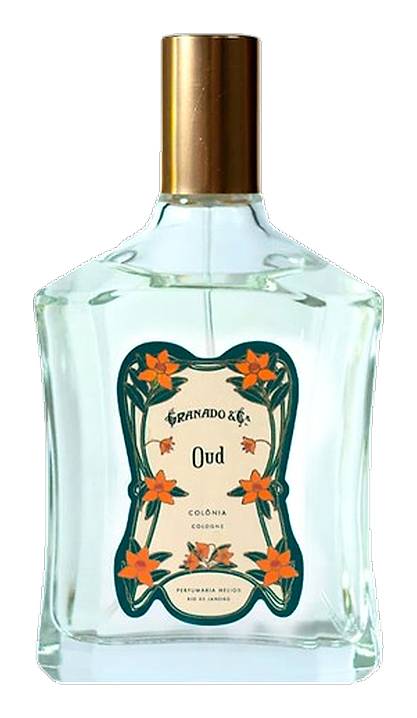
Oud is difficult. Either it dominates or it retreats. Granado saw a chance to do something different. The house has spent a century working with Brazilian botanicals, native woods, resins, herbs that most Western perfumery ignores. Perfumer Leonardo Lucheze took the material seriously but refused to let it become heavy or animalic. The solution was contrast. Bright top notes, black pepper, cardamom, to make the oud approachable. Brazilian woods in the heart to ground it. The result is an oud that opens clean and stays warm, something modern enough for daily wear but rooted enough to feel real.
The spice blend does the heavy lifting. Black pepper and cardamom give the opening its character, green, warm, slightly citrus, before the woods arrive. Guaiac wood adds a smoky resinous quality that sets it apart from typical oud openings. Cedar and patchouli in the heart are cooler, more restrained. Elemi resin bridges the phases with a balsamic lift. The absinthe is what makes the drydown work. Its sharp, herbal quality cuts through the woody warmth, prevents the base from becoming sweet or heavy. This is not a forgiving oud. It is a precise one.
The evolution
The opening hits clean. Black pepper and cardamom arrive sharp, almost citrus-like in their spice. Guaiac wood adds a smoky edge that keeps the top from being too bright. It settles quickly, thirty minutes and the heart arrives. Cedar and patchouli take over, cooler, more restrained. The oud doesn't announce itself. It arrives quietly, with sandalwood softening its edges. Then the absinthe. The drydown is where this fragrance earns its name. The absinthe lingers longest, cool, herbal, almost medicinal, cutting through the woody warmth. This is not a sweet oud. It is not a smoky oud. It is a sharpened one. Lasts a full workday on most skin. Sillage stays moderate throughout, intimate, close, yours more than anyone's.
Cultural impact
Oud, derived from the resinous heartwood of agarwood trees infected with a specific mold, has been prized for over two millennia across the Arabian Peninsula, South Asia, and Southeast Asia. In Arabian culture, oud chips are traditionally burned on coal at gatherings as a sign of hospitality and prestige, their aromatic smoke perfuming the air and guests' robes. Granado, founded in Rio de Janeiro in 1869, represents a fascinating bridge between Brazilian fragrance traditions and international luxury notes, bringing South American sensibilities to Middle Eastern-inspired ingredients. This oud fragrance allows Western audiences to experience a note historically reserved for royalty and special occasions, democratizing access to this precious material.