
The Story
Why it exists.
The beginning
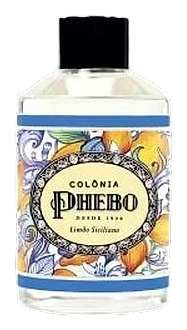
Phebo has long sourced inspiration from Brazil's botanical abundance, but Limão Siciliano represents the house turning its attention outward, toward the Mediterranean. The fragrance takes its name from the Italian citrus variety known for thick, fragrant zest and a brightness that borders on floral. Perfumer Isolda Cajueiro worked with this ingredient at its most expressive, capturing not just the tartness but the essential character of Sicilian lemon as a material of genuine sophistication. The choice to frame it within French perfumery technique reflects Phebo's broader ambition to position Brazilian botanical identity within a global classical tradition.
The philosophy here centers on honesty: real materials, real progression, no shortcuts. Bergamot and lemon are expensive choices, but Phebo commits to them. Jasmine brings tropical authenticity that Brazilian perfumers understand instinctively. Musk and cedarwood in the base are traditional choices that reinforce the classical structure. The result is a fragrance that feels neither experimental nor generic, instead occupying a precise space where Mediterranean clarity meets tropical lushness within a framework of French discipline.
The evolution
The opening with bergamot, black pepper, and rosemary establishes immediate tension: citrus brightness against savory spice and green bitterness. As the heart develops over the first forty minutes, lemon becomes the undeniable protagonist, supported by jasmine that adds body and rose that adds softness. The drydown strips away the citrus entirely, replacing it with the quiet comfort of musk, benzoin, and cedarwood. This arc mirrors the fruit itself: from the vivid exterior of the zest to the deeper, more contemplative interior of the juice and pith. Each stage has its own logic, its own beauty, and the composition never rushes from one to the next.
Cultural impact
Limão Siciliano has stayed in continuous production since its 2005 release, rare among niche-adjacent releases of that era. The fragrance launched as part of a Mediterranean collection, a line built around lemon, basil, verbena, and citrus themes. Phebo positioned itself within a space that appealed to those seeking quality outside the dominant European brands. Reviews consistently describe it as a fragrance that rewards attention.