
The Story
Why it exists.
The beginning
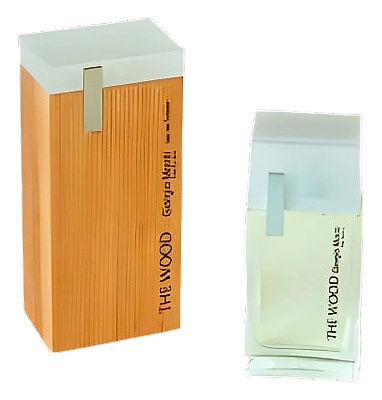
The Wood for Women carries the name that tells you exactly what to expect, and exactly how seriously the founder takes that promise. Where the original The Wood for Men tilted toward the denser, more resinous register of the wood family, this feminine counterweight pulls the same structural idea into a different key. It trades heavier bark and smoky undertones for a cleaner, brighter grain, something closer to freshly cut timber than forest floor, layered against a white floral accord that lifts rather than weighs. The composition reads at a glance: wood in front, florals as light, citrus as accent. That is the entire architecture, and it is the reason the name works as both a label and a brief. There is no supporting cast here, no secondary chord trying to complicate the central one.
The structural choice is what separates this from a standard citrus-floral. Most compositions of this shape arrange themselves in a familiar way, with a brief citrus brightness up top, white florals through the heart, and a soft musky fade at the base. Here, the woods move up early and stay present through every phase, giving the white florals something to push against instead of something to replace. Gardenia, freesia, and lily of the valley are dialed back just enough to feel airy rather than creamy, and the jasmine at the base adds an indolic warmth without tipping into heavy territory.
The evolution
The opening is where the citrus does its loudest work. Lemon and orange arrive together, with the mandarin adding a sweeter undertone, and for the first quarter of an hour the scent reads almost like a cologne splash, bright, sharp, slightly soapy. Then the transition happens. The white florals don't so much arrive as settle in. Gardenia comes first, lending a creamy warmth that softens the citrus, followed by freesia and lily of the valley, which pull the scent toward a cooler, greener register. Violet adds a powdery shadow that keeps the florals from going too sweet. As the scent wears on, the woods start to surface, not heavy, not smoky, just a clean dry grain that seems to anchor the blend.
Cultural impact
The Wood for Women sits inside a house that prefers to be discovered rather than discussed. Its audience is the wearer who treats fragrance as a private detail, someone who'd rather be asked what they're wearing than have it guessed from across a room. The scent rewards close attention rather than loud projection, holding its structure through every phase without ever leaning on volume or sillage to make its point. It wears like a quiet signature, present enough to register on the skin and on clothes, never so loud that it announces itself before the wearer walks into a room.