The Story
Why it exists.
The beginning
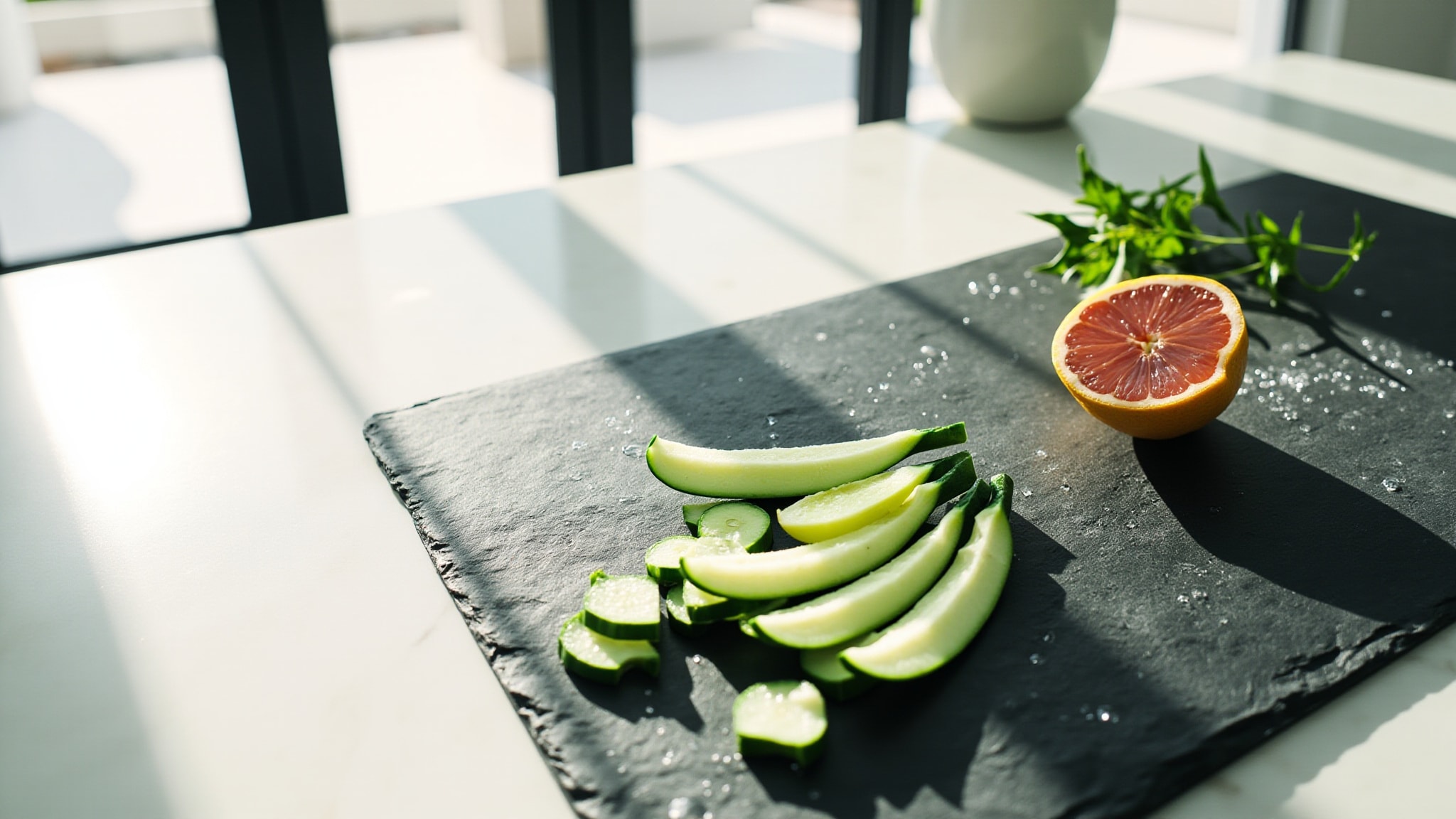
Cucumber Baie arrived in 2000. The composition reads as a clear-eyed green scent built around a handful of recognizable, almost edible-feeling materials. There's nothing abstract about what's in the bottle. You can picture each note as a thing you'd find growing somewhere, or something you'd slice open on a cutting board. Galbanum, a resin with a sharp green bite, leads the way. It smells like crushed leaves torn fresh from the stem, bitter and almost metallic, the kind of green that feels alive on skin. Cucumber sits at the center, literal and unadorned. Cold, watery, faintly vegetal, with that unmistakable coolness cucumber carries on the tongue. It smells less like a department store and more like a kitchen windowsill.
Galbanum brings the bitter, almost metallic edge of crushed leaves, the kind of green that smells like it could cut you. Watermelon adds an unexpected sweetness that reads more like water than fruit, round and cooling. The effect is a juice without weight, a sweetness that doesn't lean sugary. The aquatic notes in the heart push the whole thing toward something ozonic, almost atmospheric, like the smell of air right after rain hits warm pavement. Pairing galbanum's aggressive greenness with that floating ozonic quality creates a tension that holds your attention.
The evolution
Cucumber Baie by Fresh opens with a brisk lift of galbanum and grapefruit, green and bitter-bright, like tearing a leaf on a humid morning. The watermelon note softens that crispness into something cool, sweet, and aqueous, settling into a quiet skin scent that wears close and clean. It is a study in restraint: the coolness lingers without turning soapy, the greenness stays vegetal without going sharp.
Cultural impact
Cucumber Baie arrived when aquatic and green scents were gaining ground, offering a take that leaned fully into vegetable realism with ozonic openness. It was reissued in 2010 as part of The Fragrance Bar range, available in decants at boutiques. Among cucumber-forward compositions, it occupies the sharper, more moss-anchored end of the spectrum, with galbanum giving it a bitter, resinous backbone that softer cucumber scents tend to lack. The watermelon note adds a watery sweetness that reads more like hydration than fruit, and the aquatic heart pushes the whole composition toward something atmospheric.