
The Story
Why it exists.
The beginning
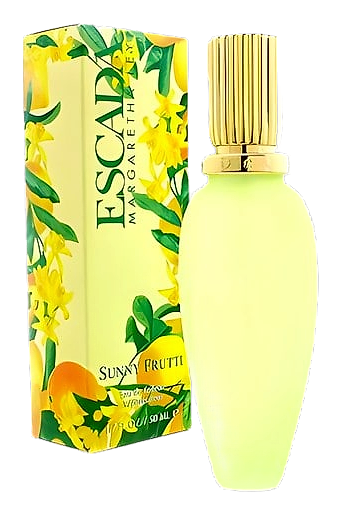
Sunny Frutti arrived in 1998, designed by Dorothée Piot for Escada. The brief was simple: bottle the feeling of a sun-drenched orchard where tropical and orchard fruits collide. Piot reached for six fruits in the top accord, banana, pear, pineapple, blackcurrant, lemon, and osmanthus, creating a creamy, tart, unmistakably bright opening that reads like a fruit salad someone made with actual care. The name says it all. This was Escada reaching for optimism, translating the house's runway energy into something you could wear before lunch and still smell at dinner. Sunny Frutti is exactly what it promises: a burst of warmth that doesn't apologize for being bright.
What makes the composition unusual is the pairing of banana with osmanthus, not a common duet in perfumery. Osmanthus brings an apricot-like floral sweetness that softens the tropical creaminess of the banana without drowning it. The heart accord leans into familiar floral territory, freesia, apricot, cyclamen, jasmine, lily of the valley, rose, and orris root, but the osmanthus keeps it from feeling generic. By the time cedar, oakmoss, vanilla, and musk arrive in the base, the fragrance has traveled from a tropical fruit stand to a garden path to a warm, slightly woody finish. The result is fruity-floral architecture that actually earns the name.
The evolution
The opening hits immediately, cool, bright, undeniably fruity. Banana and pear arrive first, followed quickly by the tart lift of blackcurrant. The osmanthus adds a floral undertone that keeps the tropical sweetness from reading as one-note. Within minutes, the heart takes over: apricot becomes more pronounced, freesia softens everything, and the rose-jasmine combination adds a familiar floral warmth. The transition is smooth, Sunny Frutti doesn't lurch from phase to phase, it flows. By the drydown, vanilla and musk have settled in close to the skin, with cedar and a whisper of oakmoss providing structure. The sillage stays moderate throughout, close enough for someone beside you to notice, but it won't announce itself across a room. That's the trade-off for a fragrance that feels like a warm afternoon.
Cultural impact
Sunny Frutti fits squarely within Escada's 1990s fruity-floral portfolio, a period when the brand was building its fragrance identity around accessibility, optimism, and bright composition. The 1998 launch placed it among a generation of fruity florals that dominated women's perfumery at the time. Its moderate sillage and fruit-forward character reflect a different era of fragrance design, one that favored approachable, everyday wearability over projection and presence.