The Story
Why it exists.
The beginning
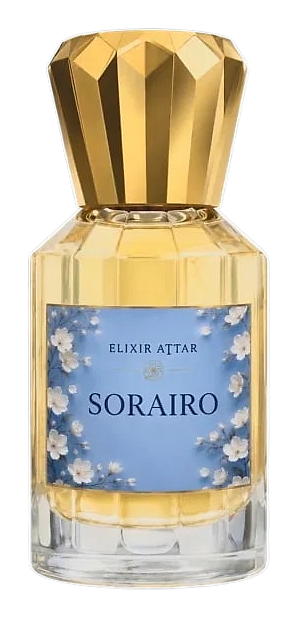
Sorairo comes from Elixir Attar, composed by Günel Mostafa. The name itself carries weight. In everyday usage, "sorairo" is commonly understood as a pale, washed blue, the color of sky just before dusk settles over a courtyard garden. The composition reads like that moment: the last daylight on petals, the first thread of incense smoke rising from a nearby hall. Günel Mostafa built the scent around a tension between openness and enclosure, between the green brightness of cherry blossom and the dense, resinous interior of temple incense. It is not a nostalgic fragrance. It aims for the feeling of standing at a threshold between outside air and indoor ritual.
The structure is what gives Sorairo its particular gravity within the green-floral register. The heart layers six materials: guaiac wood, gardenia, incense, papyrus, sandalwood, and cedar. That density gives the fragrance a grounded center that anchors the brighter top notes into something longer-lasting and more contemplative. The base adds oud, tobacco flower, labdanum, and vanilla, which push the composition toward warmth without making it heavy.
The evolution
The opening reads cool and lifted: cherry blossom and green tea sharing the air with a clean ginger heat. The sparkle fades relatively early, replaced by something more grounded. Gardenia and incense arrive together, and the scent shifts from outdoor brightness to something more enclosed. Papyrus and guaiac wood add a dry, slightly papery texture underneath the florals, the way incense clings to old wood in a temple hall. The drydown is where Sorairo finds its final voice. Vanilla and tonka soften the edges, labdanum adds a faint amber glow, and the oud sits far enough back to read as warmth rather than as oud. On close inspection later in the day, the sandalwood and tobacco flower linger, quiet and slightly sweet.
Cultural impact
Sorairo brings together materials that rarely share space in a single bottle: incense and oud traditions meeting cherry blossom and papyrus, with gardenia and green tea threading through the middle. For wearers, it reads as a bridge between two perfume worlds, offering florals with substance and incense with air rather than weight. The combination opens a conversation between floral traditions rooted in East Asian aesthetics and the resinous depth associated with Middle Eastern perfumery, making it a fragrance that rewards close attention rather than quick judgment.