
The Story
Why it exists.
The beginning
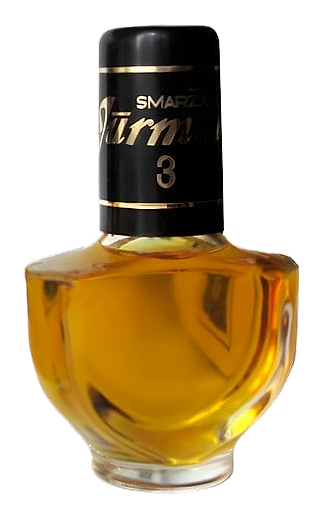
Jūrmala is the beach town an hour from Riga where Riga residents have escaped to since the 1920s, wooden summer houses, pine groves, the Baltic Sea. Jurmala 3 arrived in 1983, created by Antonina Vitkovskaya, Victoria Ryabko and Liesma Oše (Prūse). Three perfumers, one brief: capture the warmth of a summer evening on that coast. Not the salt air. The people, the wooden buildings still holding the day's heat, the sense of ease that comes when the Baltic summer finally turns warm. This is a perfume about that specific feeling, not a place, exactly, but the memory of a place.
What makes Jurmala 3 interesting is the contrast between its floral opening and its leathery base. Rose and peach suggest something soft, almost innocent. But patchouli and labdanum push into earthier territory, and the leather anchor makes sure you feel the weight of it. Ylang-yllang and tuberose add a tropical lushness that feels borrowed from somewhere warmer than the Baltic coast. The result is a fragrance that starts girlish and ends up somewhere more complex, like the person who wore it growing up, then came back years later and wasn't the same.
The evolution
The opening hits with rose and peach, bright and accessible, the part that makes people stop and ask what you're wearing. Violet adds a powdery softness that keeps it from being too sweet. Within 20 minutes, the florals recede and the heart takes over: patchouli's earthiness anchors the ylang-yllang, while tuberose and labdanum push into warm, slightly animalic territory. The drydown is where Jurmala 3 earns its stripes. Sandalwood and amber provide warmth, but the leather makes itself known, it's not subtle, and it doesn't try to be. The musk underneath keeps everything close to the skin. On most people, expect 4-6 hours of presence, with the base notes lingering longest. By the end, it's intimate and warm, the kind of scent that someone might notice when you're close enough to hug.
Cultural impact
Jurmala 3 is one of the more sought-after vintage Dzintars releases among collectors in Eastern Europe. It's not as famous as Mana Dzimtene (1965) or Briga (1982), but among those who know, it has a following, partly for the quality of its construction, partly for the way it balances sweetness and animalic warmth in a way that feels honest rather than calculated.