The Story
Why it exists.
The beginning
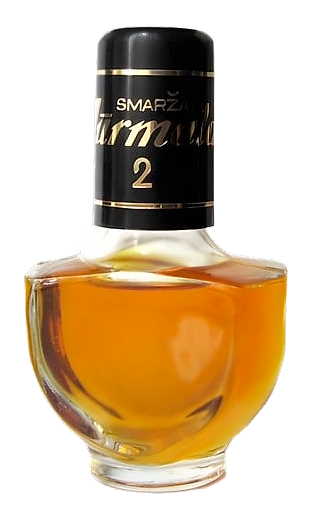
Jurmala became a fragrance concept at Dzintars, the Riga perfume house. Jurmala 2 arrived as a successor that refined and deepened its predecessor. Three perfumers signed the formula: Antonina Vitkovskaya, Victoria Ryabko, and Liesma Oše (Prūse). The fragrance has a quiet presence that holds its ground rather than announcing itself. It represents a particular approach to scent design, where restraint shapes how the composition unfolds.
What makes Jurmala 2 interesting is its structure, not the notes themselves, but how they hand off. The top is all brightness and green: bergamot spark, violet leaf, a citrus lift that provides initial character. The heart is where Dzintars committed, vetiver and patchouli together, anchoring the powdery florals that follow. The base of benzoin, labdanum, and white musk is warm without being sweet. It's a composition that knows what it is and doesn't apologize for it. Three perfumers worked on this formula, an unusual collaboration that brings distinct perspectives to the balance.
The evolution
The opening introduces bergamot and lemon brightness, with lily of the valley contributing its characteristic green presence. Then vetiver and patchouli arrive together, asserting themselves as the florals shift. Iris and rose retreat from prominence, becoming texture rather than focus, that characteristic moment defines the heart of the fragrance. By the second phase, the drydown settles. Benzoin and labdanum warm the composition, white musk keeping everything soft and close. The following day, there's a faint warmth left, powdery and amber-adjacent, present without being insistent.
Cultural impact
Jurmala 2 has attracted collectors in Eastern Europe who appreciate its particular composition. Its appeal lies in the powdery-iris and earthy-vetiver structure, a composition that feels honest and grounded rather than designed to impress. The fragrance occupies a specific space in the landscape of Soviet-era perfumery, among the most considered compositions from that period.