
The Story
Why it exists.
The beginning
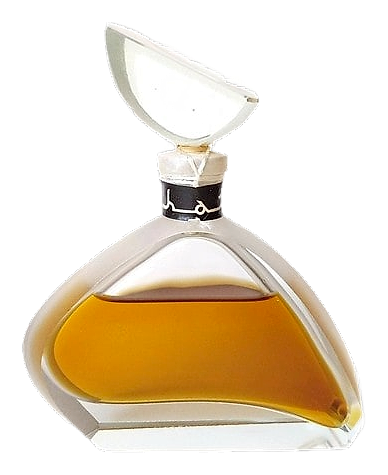
Bronislava Schwarzman designed Agats in 1961 for Dzintars. Schwarzman's brief was clear: create something with a strong point of view, grounded in a structural green backbone. She chose green. Not green as decoration, but green as architecture, the structural element around which everything else would orbit. The result was aldehydes, white florals, leather, oakmoss, and amber arranged with the kind of confidence that only comes from knowing exactly what you're building and why. The aldehydes provide an immediate waxy shimmer, metallic and bright, lifting the lighter florals into something almost sparkling before settling. White florals contribute creamy, indolic warmth that softens the sharper elements without diluting them.
The aldehydes aren't decorative here. They're the scaffolding, the element that holds the whole structure upright and lets the leather, the oakmoss, and the amber do their work without collapsing into noise. Without that aldehydic brightness cutting through the heart, Agats would be a different fragrance entirely: heavier, less interesting, the kind of composition that announces itself without saying anything. The green chypre tradition gave Dzintars its identity, and Agats is proof of why, this is a piece that asks nothing of you except attention, and rewards that attention with something that doesn't need updating.
The evolution
The aldehydes hit first, that familiar waxy shimmer, metallic and bright, lifting the geranium and orange blossom into something almost sparkling. The leather takes over next, asserting itself as the real voice of Agats, dry and present, with artemisia and vetiver adding their bitter, smoky weight underneath. Jasmine and violet soften it slightly, but not much. As the florals fade, the leather and green notes continue their dialogue, each holding space without either dominating. Then comes the oakmoss, patchouli, amber and musk. The drydown is where Agats earns its age, deep, mossy, warm in a way that speaks of patience and restraint. These base notes linger with quiet confidence, their interplay creating a soft, animalic warmth that settles into the skin rather than announcing itself.
Cultural impact
Green chypres occupy a particular niche in the wider world of scent, loved by collectors, appreciated by those who find modern florals too sweet, respected by anyone who understands what a well-constructed chypre requires. While Chanel No. 5 dominated the aldehydic conversation in the West, Dzintars was building something different, a green chypre with its own logic and its own audience. Agats occupies a specific cultural register: for those who want structure and intentionality without flashy performance.