
The Story
Why it exists.
The beginning
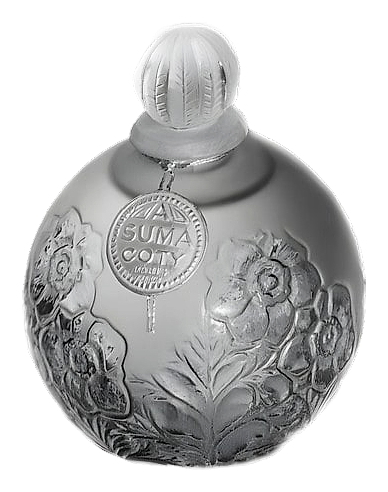
Vincent Roubert, working alongside François Coty, created A'Suma in 1934 with a singular ambition: to bottle the atmosphere of Bali's tropical forests. The island's volcanic slopes, its temples wreathed in incense smoke, the legendary sensuality of its culture, Roubert translated these into a wearable composition. The name itself, A'Suma, echoes the Sumatran archipelago nearby, a geographic nod to the region's intensity. It was perfume as travelogue, as provocation, as a dare to bring something far-flung close to the skin.
The camphor-mint opening is the structural trick. It arrives cold, almost clinical, a placeholder for somewhere cool and distant, before bergamot softens the edges and the tropical heart takes over. That pivot, from pharmaceutical chill to humid warmth, is what makes A'Suma hold together. Without it, the vanilla and civet might overwhelm. With it, the composition breathes. The eight base notes could easily collapse into noise, but the animalic elements, civet, ambergris, act as binding agents rather than features. They don't announce themselves. They make everything else coherent.
The evolution
The opening hits immediately: camphor and mint create a cool, almost mentholated sensation on skin, as if the air just dropped ten degrees. Bergamot adds a brief citrus flicker before the heart takes over around the thirty-minute mark. Heliotrope and lavender arrive together, powdery and herbal, then incense smoke curls through and the tuberose emerges, sweet, indolic, unmistakably tropical. By the second hour, the drydown begins. Camphor has fully receded. Patchouli and leather ground the composition, vanilla and tonka soften everything into a warm, powdery finish. The base lingers for hours, community reviews consistently report eight to ten hours of wear, with the drydown remaining close to the skin rather than projecting outward.
Cultural impact
A'Suma occupies an early position in the oriental-spicy lineage, predating heavier compositions like Opium and Youth-Dew while sharing their warm, animalic ambitions. Community reviews describe it as an ancestor of the oriental genre, spicy, subtly animalistic, woody, resinous, though some find it less assertive than later landmarks. The camphor-mint opening sets it apart from contemporaries, creating a distinctive cool-warm tension that remains unusual even by modern standards.