The Story
Why it exists.
The beginning
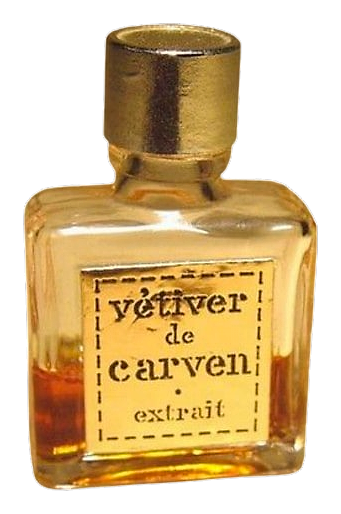
Vétiver Extrait arrived from Carven in 1957, on the heels of a fragrance program that had already given the house its early identity. The juice was composed by Edouard Hache, and it was never a starchitect statement piece. Carven built for real bodies, real weather, real budgets, and this vetiver continues that line, working at a lower volume than the louder vetiver releases of its decade. The aromatic profile stays close to the skin, built with a Parisian everyday register rather than ceremony, and it sits in the wardrobe of someone who already knows what they want from a bottle. The Carven woman and man were busy, dressed for the office and the bistro, not the gala.
What's interesting here is how Hache stacks the notes. Orris pulls the vetiver down into something powdery, almost cosmetic, while sage and petitgrain keep it firmly outside the cologne category, giving the green a herbaceous edge that reads more apothecary than barber. The base lands on amber and myrrh instead of leather or tobacco, which moves the whole composition toward a woody chypre with rougher hands and less polish than the classic template.
The evolution
The first spray lands bright and a little bitter, sage and petitgrain in the air as the citrus opens up cold and immediate in the first few minutes. Within half an hour the citrus steps back and vetiver moves in, carrying orris root with it, the green deepening toward something that smells like damp forest floor and old paper, earthy, rooted, almost loamy in feel rather than medicinal. By hour two, sandalwood and cedar have arrived underneath, the kind of woody texture that sits close to skin rather than projecting outward, dry wood without smoke or sweetness. The middle runs warm and dry for another two to three hours before amber and myrrh take over, settling into a soft moss-and-musk finish that stays present through the late hours of the day without ever raising its voice.
Cultural impact
Released in 1957 and composed by Edouard Hache, it arrived as a mens-leaning woody chypre that wears closer than most vetiver compositions of its period, staying near the skin and refusing to fill a room on its own. The fragrance finds its audience among people who already know what they like from a bottle and don't need to be convinced by volume or projection. As a vetiver, it leans drier and more aromatic than the green-citrus template, trading freshness for warmth and letting the orris and amber carry the drydown rather than leaning on the traditional citrus-and-musk structure.