
The Story
Why it exists.
The beginning
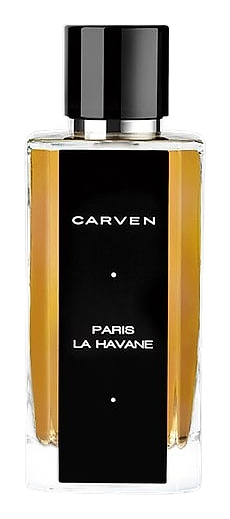
Paris La Havane takes its name from Cuba's capital, not the tourist version, but the city that exists in memory: dim bars, leather armchairs, the smell of premium tobacco curling through warm air. Carven's Paris collection (launched in 2019) has built a reputation for translating specific places into scent, and La Havane is perhaps its most fully realized entry. The brief was simple: masculine elegance, the kind that doesn't announce itself. Emilie Bevierre-Coppermann, the perfumer behind the composition, worked with Carven's vision of a subdued atmosphere, large leather armchairs, low light, the exhale after a long day that finally allows pause. This isn't Havana as postcard. It's Havana as state of mind.
What makes Paris La Havane distinctive is how it handles tobacco, not as a single note but as a full environment. Cuban tobacco forms the heart, but it doesn't arrive alone. Lavender sneaks in to soften what could have been a one-note heavy hitter, while rose adds a quiet warmth that prevents the composition from tipping into purely masculine territory. The interplay between the smoky, resinous top (black pepper, elemi) and the deep leather-amber base creates a fragrance that moves through its wear rather than sitting static on skin. It's the kind of structure that rewards attention, the opening says one thing, the drydown says something else entirely, and both feel intentional.
The evolution
The opening hits crisp and bright, mandarin orange cuts through first, then black pepper arrives with a quick bite, while elemi resin adds a faint turpentine warmth that reads more aromatic than medicinal. Within fifteen minutes, the citrus fades and Cuban tobacco takes over, but it doesn't announce itself loudly. It grows. The lavender follows, threading through the tobacco like a quiet counterpoint, and suddenly the composition feels less like a fragrance and more like a room you've entered. Rose lingers at the edges, barely there, just enough to keep the heart from becoming too heavy. By the third hour, leather and amber anchor everything. Patchouli stays close to skin, a low hum rather than a statement. On most skin types, this drydown holds for hours, the kind of longevity that means you don't need to reapply, just live your evening and wake up with something still there, quieter now, worn-in.
Cultural impact
Paris La Havane arrived in 2019 as part of Carven's city-fragrance project, positioning specific urban atmospheres as olfactory narratives. The launch coincided with a broader revival of tobacco-forward masculine fragrances, leaning into a cultural moment where wearers sought bold, narrative-driven scents over safe florals. Havana itself carries romantic weight in Western perfumery, smoky, libertine, slightly dangerous, which Carven borrowed without literal translation. The fragrance references Cuba through tobacco and leather but filters it through Parisian restraint, creating a tension between exotic fantasy and European sophistication that appeals to a wearer who wants to smell like they've been somewhere without leaving the city.