The Story
Why it exists.
The beginning
Écrin de fumée belongs to Serge Lutens' philosophy of fragrance as autobiography, sensory memory given form. Christopher Sheldrake has served as the house perfumer since 1992, building nearly the entire catalogue with a preference for abstraction over literalism, structure over accident. This fragrance takes that sensibility and turns it toward late-night indulgence, the kind of evening that leaves a mark. The name alone, Écrin de fumée, smoke's jewel case, tells you exactly what it is before you smell it. A jewel box filled with smoke. Something precious, something that shouldn't exist, something you open anyway.
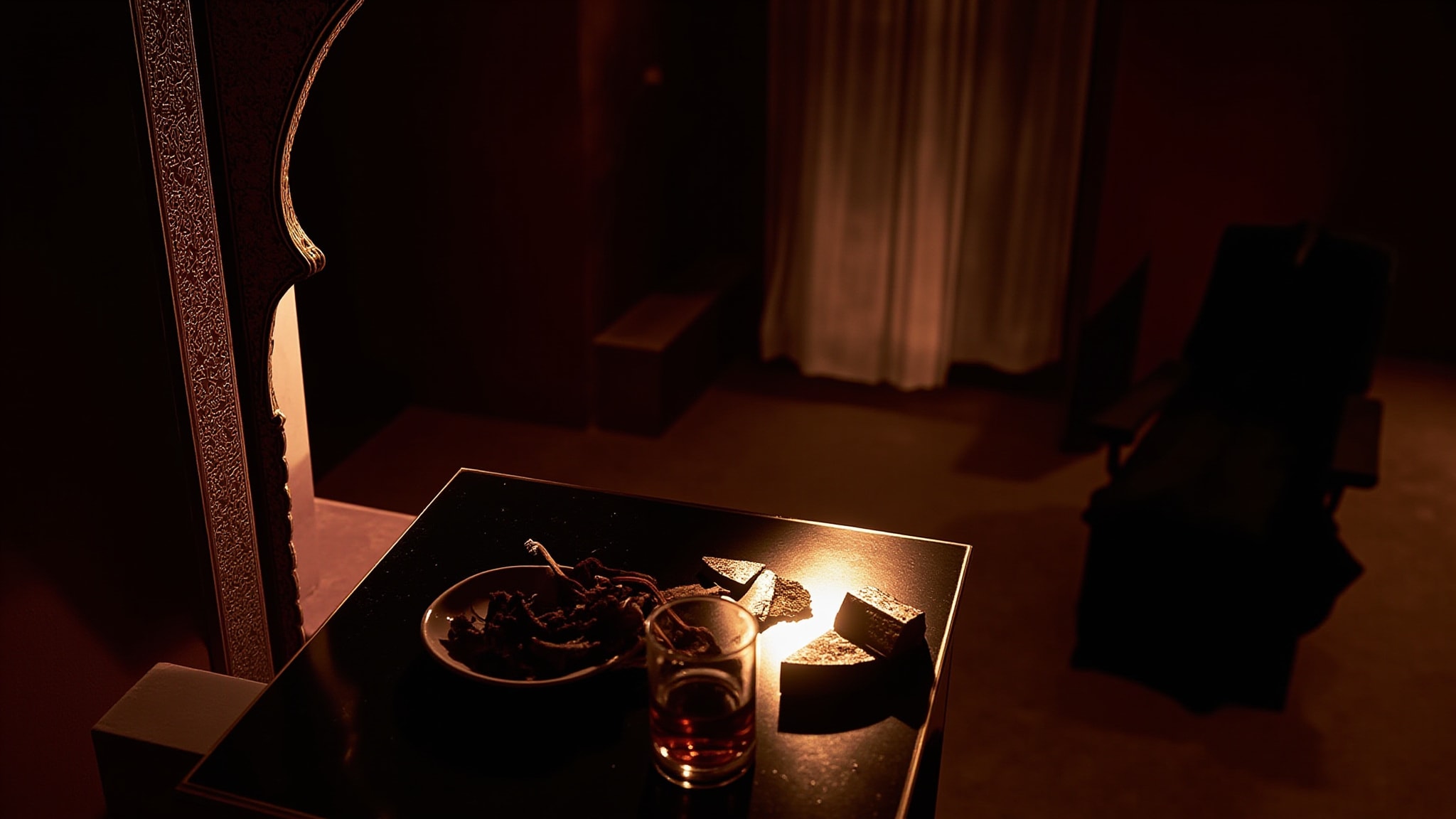
The tobacco in Écrin de fumée isn't the tobacco of a tobacconist's shelf. It's the tobacco of memory, a rich, dark sweetness that suggests a smoking jacket, a leather chair, the amber warmth of a room where decisions get made. The cacao amplifies that warmth, adding a sweet, slightly bitter edge that reads as chocolate left too near a candle flame. Rum brings the alcohol warmth without the bite, that boozy, celebratory quality that makes everything feel slightly more alive. And smoke? Smoke is the connective tissue. It threads through every phase, holding the composition together, making the sweetness feel earned rather than easy.
The evolution
The opening arrives with a rush. Rum's warmth and tobacco's dark sweetness hit first, immediate, almost startling in their clarity. Smoke follows, curling through the air, and with it comes the cacao: sweet, slightly bitter, like chocolate left near a candle. The drydown is where it gets interesting. Smoke doesn't fade, it deepens. Settles into skin like a memory you didn't know you'd kept. That's the key. The tobacco doesn't fade, it deepens. By the time the rum and cacao settle, you're left with something that smells like a room after the candles have burned out. The warmth lingers for hours, close enough that only someone leaning in will catch it.
Cultural impact
Écrin de fumée fits squarely into Serge Lutens' philosophy of fragrance as autobiography, sensory memory given form. The house has never approached fragrance as a commercial exercise, creating perfumes that resist trends and invite projection. This one continues that tradition, drawing from the house's longstanding relationship with smoke and tobacco while adding a layer of romantic decadence. It's a scent for those who burn life at both ends, and smell extraordinary doing it.