
The Story
Why it exists.
The beginning
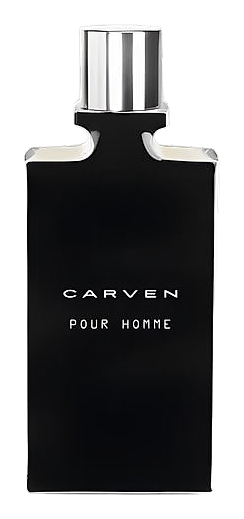
Carven launched its men's collection in 2014 with a clear intent: put men in the spotlight without the usual fanfare. The brief was elegance, not aggression. Francis Kurkdjian and Patricia Choux built Carven Pour Homme around a tension, green freshness and warm spice that refuse to choose sides. Violet leaf and grapefruit open clean and sharp. Sage, nutmeg, and cedar take over quietly, adding depth without heaviness. The bottle, designed by Thierry de Bashmakoff, reflects this philosophy: lacquered glass in black and green, silver cap, architectural without being loud. The 2014 release positioned Carven Pour Homme as the answer for men who wanted a fragrance that worked without announcing itself.
The brief was simple: masculine without aggression, fresh without being fleeting. Vetiver and sandalwood anchor the base so the green opening doesn't simply vanish into the air. Nutmeg adds warmth without sweetness, the kind of spice that works in the background rather than screaming for attention. Sage gives the heart an herbal quality that reveals itself slowly, hour by hour. This is a fragrance built for the drydown, not the first impression. The composition rewards patience. The cedar doesn't show up until the second hour. The sandalwood doesn't announce itself until the third. By then, the initial freshness has become something else entirely, warm, quiet, and difficult to pin down exactly.
The evolution
The opening hits cool and green, violet leaf and grapefruit arriving together like morning air over wet grass. The grapefruit fades within the first hour, leaving the violet leaf to carry the freshness into the heart. Around the thirty-minute mark, sage appears. Then nutmeg. Cedar takes longer, settling in around hour two when the initial brightness has started to soften. By hour three, the composition has changed completely. The green is gone. What remains is warm spice and soft wood, with sandalwood arriving quietly to extend everything. The drydown belongs to vetiver, dry, slightly smoky, and lasting well beyond what the initial freshness promised. Eight to ten hours on most skin. The next morning, there's a faint trace on the wrist that no amount of washing seems to fully remove.
Cultural impact
Carven Pour Homme sits in a particular niche: the accessible luxury space where quality and restraint intersect. It's not trying to compete with powerhouse masculine fragrances or chase niche trends. Instead, it occupies a quiet middle ground, the kind of fragrance that appeals to men who've moved past needing a scent to announce their presence. The 2014 release arrived at a moment when the market was saturated with aggressive, projecting fragrances, making Carven Pour Homme's moderate sillage and green-to-woody evolution feel like a deliberate alternative rather than a compromise.