The Story
Why it exists.
The beginning
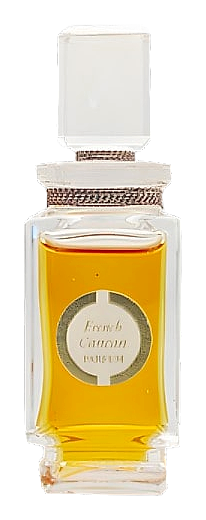
In 1936, Ernest Daltroff conceived French Cancan for the American market, a fragrance designed to distill the image of Paris into something you could wear. The name itself conjures the cancan: the high-kicking, scandalous dance performed at the Moulin Rouge, the kind of French iconography that reads as lighthearted and joyful across the Atlantic. Daltroff built this as a white floral composition, jasmine, lilac, violet, that would perform with theatrical confidence. For a French house to export its identity this directly was both commercial instinct and cultural declaration: this is what Paris smells like, distilled into a bottle and shipped west.
What makes French Cancan structurally interesting is the cool-warm contrast at its heart. Lilac and violet open cool, almost aldehydic, a powdery crispness that feels distinctly 1930s. Then jasmine arrives, warm and indolic, pushing the temperature in the opposite direction. The African Orange Flower in the heart adds a bitter-floral edge typical of chypre structures, while iris and orris root introduce that powdery, slightly earthy depth that gives the fragrance its backbone. Oakmoss and sandalwood in the base don't just ground the florals, they extend them, creating the 8-10 hour arc that makes this a fragrance you smell on yourself the next morning.
The evolution
The opening announces itself with cool violet and lilac, powdery, slightly aldehydic, the kind of freshness that smells expensive before you've even hit the heart. Jasmine doesn't rush. It arrives after a few minutes, warm and indolic, joining the lilac in a white floral duet that dominates the next two hours. The rose and lily of the valley add freshness, but jasmine holds the center. As the heart settles, the base begins its slow reveal: patchouli first, earthy and grounding, then oakmoss and sandalwood emerging together. The orris root adds a powdery iris quality that threads through the drydown, extending the powder note well past when the florals have softened. By hour six, you're left with a warm, woody, slightly mossy skin scent, the kind of ghost that makes you reach for the bottle again.
Cultural impact
French Cancan was conceived for the American market in 1936, carrying the image of lighthearted Parisian nightlife in its name. The cancan, high-kicking, scandalous, performed at the Moulin Rouge, was exactly the kind of French iconography that read as glamorous and joyful across the Atlantic. This was Caron's bet on exporting French sophistication: bottle the idea of Paris, ship it west.