
The Story
Why it exists.
The beginning
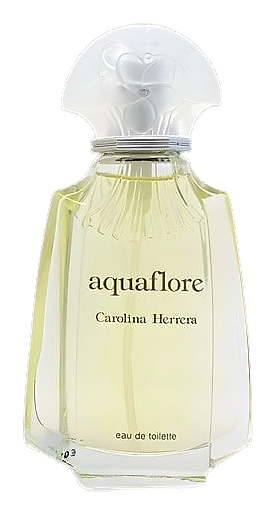
AquaFlore arrived in 1997 as a limited expression from a house that had already proven it understood the power of contrast. Created by Carlos Benaïm alongside Rosendo Mateu, this was not a statement fragrance, but a mood. The name itself is the brief: aqua for water, flore for bloom. A spring garden intersected by a clear stream, translated into scent rather than silk. The coolness of water meets the warmth of blossoms in a composition that feels both fresh and intimate. Each note arrives without fanfare, the citrus and fruit opening giving way to florals that drift quietly across the skin, never loud, never demanding. It is a fragrance that rewards patience, revealing its character slowly rather than announcing itself all at once.
What makes this composition interesting is the way it uses powdery iris as a structural element rather than decoration. In most fragrances, iris sits quietly in the base. Here, it threads through the heart and stays present in the drydown, giving the white florals, jasmine, lily of the valley, cyclamen, a slightly woody, root-like quality that keeps them from floating away entirely. The melon and peach in the opening aren't sweetness for its own sake; they're the watery vehicle that carries the florals downstream. By the time sandalwood and amber arrive, the whole thing has settled into something warm and close, like skin in afternoon light.
The evolution
The opening is immediate: mandarin and melon arrive together, bright and translucent, like biting into a ripe peach beside a pool. The violet appears, adding a faint powdery sweetness that softens the fruit without dulling it. Within fifteen minutes, the heart takes over, cyclamen and lily of the valley assert themselves, the jasmine arriving last and warmest. The transition is not dramatic. It is more like watching fog lift off a garden in the early morning. By the second hour, the florals have settled into the skin, and what is left is the iris and sandalwood, a quiet powdery-woody warmth that lingers close to the skin. The fragrance maintains a subtle presence throughout, intimate rather than projecting, offering its character to the wearer rather than announcing itself to the room.
Cultural impact
AquaFlore arrived in 1997 as a limited edition from Carolina Herrera. The fragrance blends fruity florals with a distinctive iris-amber drydown, positioning it as something distinct from more straightforward aquatic compositions. Its structural iris backbone sets it apart, giving the fragrance more weight and complexity than its fresh opening might suggest. The composition moves from bright, translucent top notes through a deeper floral heart, settling into a powdery-woody base that provides contrast and staying power.