The Story
Why it exists.
The beginning
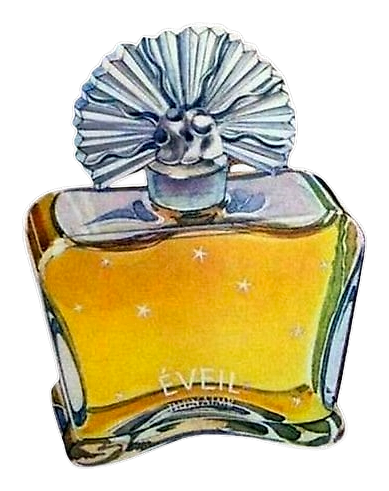
Éveil was among the very first compositions associated with Robert Bienaimé, released in 1935 as part of the early output of the Parisian house that bore his name. The composition reads like its title suggests: a cool, bright opening that deepens into something more grounded and warm the longer it sits on skin. Aldehydes lift the top with a crystalline clarity, almost metallic in the first few minutes, before softening as the florals and base materials settle in. Bienaimé built his reputation on classical French elegance with a distinctive character all its own, and Éveil established that house signature from the very start. It was meant for a woman who moves through her morning without fuss, the kind who lets perfume close the door behind her rather than announce her arrival.
What's unusual about Éveil is how it balances aldehydes, which read bright and almost metallic in less careful hands, against a full-bodied white floral heart that could easily tip into soapiness or sweetness if the perfumer weren't paying attention. The sage in the top adds an herbal dryness that sharpens the aldehydes rather than softening them, lending a green facet that gives the opening its sense of wakefulness. Narcissus gives the heart a cool, green-edged sharpness that keeps the iris and violet from collapsing into something purely cosmetic or confectionary.
The evolution
The first ten minutes are pure light: aldehydes fizzing over sharp citrus and a thread of sage, almost surgical in their clarity. That brightness doesn't fade so much as it translates into the heart, where ylang-ylang, jasmine, and a cool narcissus arrive within the first half hour. The narcissus does something interesting here: it smells faintly of green tea and cold stone, and it keeps the florals honest, prevents them from dissolving into generic sweetness. Violet and iris add a powdery coolness that becomes the dominant register for the next two or three hours, a sort of compressed face-powder warmth that shifts with body heat. Around hour four, the base settles in: oakmoss, sandalwood, soft amber, white musk. Nothing dramatic. Just the slow exhale of a composition that was designed to wear close to skin rather than fill a room. What remains the next morning, on a scarf or collar, is a whisper of iris and oakmoss, almost like the scent of a vintage compact left open overnight.
Cultural impact
Éveil has no modern marketing footprint and barely any community discussion to speak of, which suits it perfectly. It's a fragrance for vintage fragrance collectors and people who already know what they're looking for, not a scent that announces itself across a crowded room or chases trends. Discussion tends to surface only among dedicated collectors, perfume historians, and those who actively seek out pre-war French florals. The low profile isn't an accident; it's the natural result of a composition that was designed for close wear rather than broad appeal.
The House
BienaiméBienaimé is a Parisian fragrance house founded in 1935 by perfumer Robert Bienaimé, who brought his expertise from a distinguished career at Houbigant to create his eponymous brand. The house specialized in refined French perfumes that captured an elegant, understated vision of femininity and masculinity through carefully balanced compositions. After falling silent during the 1960s, Bienaimé returned to life in 2021 when Cécilia Mergui acquired the brand and began reissuing heritage formulas alongside new creations. The revival preserves the original spirit of the house while introducing the collection to a new generation of fragrance enthusiasts seeking authentic vintage character.
The Creator
Robert BienaiméBienaimé composed in the grand French tradition, favoring lush florals, elegant structure, and compositions that revealed their complexity slowly. He paired florals with warm woods, resins, and rare absolutes, building depth through layering rather than splash.