The Story
Why it exists.
The beginning
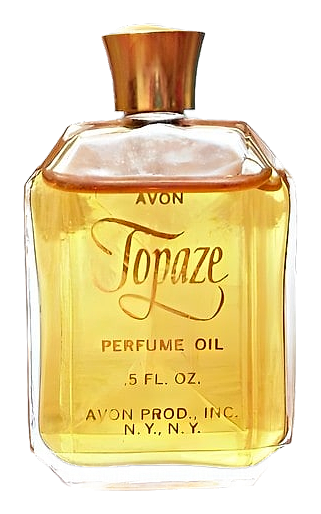
Topaze arrived in 1959, a period when aldehydic florals defined what luxury fragrance could be. The scent opens with a bright, sparkling aldehydic presence that lifts the composition into something luminous. As it settles, the fragrance reveals a warmer, more complex character, the initial sparkle softening into a powdery floral heart. Jasmine and rose contribute a creamy white-floral dimension, while carnation adds a subtle spiced quality that gives the heart its complexity. The base anchors the composition with warmth, sandalwood and vetiver providing a woody foundation, while amber and benzoin add sweetness and depth. A hint of animalic note prevents the drydown from becoming purely decorative, lending the composition an intimate, skin-close quality that lingers.
What makes Topaze work is the way its aldehydes behave. Aldehydes in perfumery create a lifted, almost metallic brightness, the shimmer in the glass. But here, that aldehydic spark doesn't simply vanish. It lingers beneath the florals as a structural element, warming the composition from within. The peach in the top accord amplifies this: fruit that reads more golden than fresh, more jam than juice. In the heart, the carnation is the surprise, spiced and clove-like, it prevents the lily of the valley and jasmine from becoming too gentle. Iris then draws everything together with its powdery, violet-root depth. By the time the base arrives, the aldehydes have softened but not disappeared.
The evolution
The opening hits bright and fizzing, aldehydes doing exactly what aldehydes do, lifting bergamot and lemon into something that sparkles. The peach arrives quickly, softening the citrus edges and adding a golden, ripened quality to the top notes. The aldehydic brightness creates an immediate impression of luminosity, the metallic shimmer adding an almost crystalline quality. Then the florals take over. Lily of the valley leads the transition, green and dewy, followed by jasmine and rose creating a creamy white-floral heart. The carnation emerges mid-drydown, spiced and assertive, this is where Topaze earns its complexity. Ylang-ylang adds tropical warmth, and the iris begins to powder everything down, transitioning the composition toward its dry phase. As the aldehydic brightness recedes, the florals remain present but softer, their edges rounded.
Cultural impact
Topaze entered the fragrance landscape in 1959, a time when aldehydic florals dominated the luxury segment. The scent offers an aldehydic opening that provides immediate sparkle, followed by a powdery floral heart and a warm, slightly animalic base. What distinguishes Topaze is its use of civet in the drydown, which gives the composition an intimate, skin-close quality that moves beyond purely decorative fragrance making. The aldehydic character provides initial brightness, the powdery depth comes from iris and floral notes, and the animalic warmth grounds the scent in something more complex than simple elegance.