
The Story
Why it exists.
The beginning
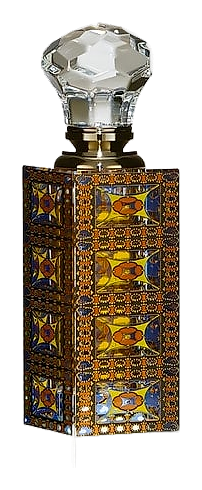
The name says it plainly. Rehanat Al Bahrain, a fragrance of Bahrain, by Bahrain. It comes from Asgharali, the Bahraini perfume house whose work is rooted in traditional attar distillation, an oil-based practice that predates the spray-on formats most people reach for today. This particular composition belongs to that older tradition. An attar, oil-based, undiluted. The kind you dab from a vial rather than spray. Built on saffron and oud with rose threading between them like a familiar accent in an unfamiliar sentence. The saffron here carries that metallic, almost leathery edge rather than reading sweet, and the oud underneath grounds everything in something resinous and slightly animal before the drydown has even begun to settle. The format matters here.
What sets this composition apart is the architecture beneath the obvious materials. Saffron and oud are expected, they're the calling card of every Gulf house with ambition. Here they share space with cypriol, also known as nagarmotha, an earthy rhizome oil that adds a smoked, soil-rooted depth most Western readers associate with vetiver but wilder. Then there's guaiac wood, a lesser-seen material that lends a dry, slightly medicinal warmth. Combined with sandalwood in the base and patchouli for shadow, the construction reads less like a luxury statement and more like a working perfumer's draft, dense, textured, intent on building something honest rather than something flashy.
The evolution
The first ten minutes are nearly all saffron, the metallic, leathery kind, not the sweet kitchen version. Nutmeg hums underneath it, warm but not sugary. Cedar arrives quickly too, more as texture than as note. There's something almost incense-like in how it reads, like the air after a match is struck. Around the thirty-minute mark the rose finally speaks. It's a dense, almost jammy rose, anchored by orris and softened by ylang-ylang. More the kind that carries weight and still smells like something. Lily adds a faint coolness, but this composition doesn't lean cool for long. An hour in, the base takes over and stays. Oud arrives fully, resinous and slightly animal, sitting on a bed of cypriol that smells like rain on warm earth. Patchouli gives it shadow. Sandalwood and guaiac wood round out the edges until everything reads as one continuous texture rather than a list of ingredients.
Cultural impact
Rehanat Al Bahrain sits firmly inside the traditional Gulf attar conversation. It's a release rooted in the materials and wearing habits that regional perfumery has refined over generations, and it asks to be judged on those terms. The fragrance tends to attract two kinds of wearers. There are people with an attar rotation already in place, who know what oil-based wear offers and what it doesn't. And there are curious newcomers willing to give an undiluted format a real chance rather than reaching for something familiar. What both groups tend to notice is how the composition treats its own structure.