The Story
Why it exists.
The beginning
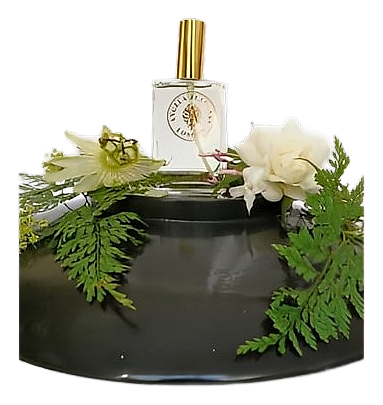
Angela Flanders has built her reputation from East London, working as an independent perfumer who sources inspiration directly from the botanical world around her. White Flowers stands as one of the clearest expressions of that philosophy, a fragrance that does exactly what its name promises, and that's precisely the point. Where many compositions obscure their intent behind layers of abstraction, this one trusts its materials to speak for themselves. The composition gathers orange blossom, jasmine, and tuberose into a single white bouquet, then grounds it with violet and a mossy, galbanum-laced base that keeps the whole thing tethered to something living rather than purely decorative.
The jasmine-tuberose accord here carries a distinctive green bite rather than the confectionery sweetness that dominates many white floral compositions, where the creamy, lactonic warmth of jasmine absolute and the almost-buttery density of tuberose often define the experience. Oakmoss in the drydown pulls the composition further into earthy territory, lending an unmistakable chypre character to what might otherwise have been a conventional bouquet.
The evolution
The opening minutes are dewy, almost watery in their freshness, with orange blossom carrying most of the weight of the composition and jasmine threading underneath like a quieter voice answering back. Tuberose sits further back in the arrangement, creamy and green at once, more vegetable than carnal in character. As the early development unfolds, a powdery coolness arrives and rose begins to surface, not as a dominant note but as a warm undertone that rounds the sharper edges of everything above it. There's a sense of moisture throughout this early phase, a quality that recalls flowers just brought in from outdoors, still carrying the chill of the morning air. As the composition settles past its first flush, the white flowers recede enough to let the base notes speak more clearly.
Cultural impact
White Flowers holds a secure position within the world of independent perfumery, where literalism and botanical fidelity are valued over abstraction. The fragrance appeals to anyone who wants their perfume to evoke something closer to a real garden than an idealized fantasy, with soil and stems left intact. The galbanum-moss base lends the composition a subtle chypre character, an old-fashioned reference that recalls the great green florals of earlier eras, while the jasmine-tuberose opening keeps the entire project firmly rooted in white floral territory.