
The Story
Why it exists.
The beginning
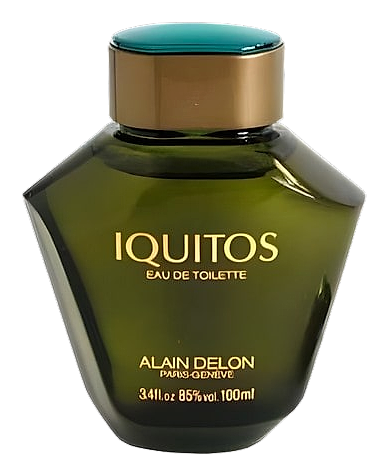
Iquitos arrived in 1987, when Gerard Anthony had been working within the Alain Delon house for seven years, since the inaugural 1980 men's launch that carried the actor's own initials. The fragrance drew its name from the Amazonian city in Peru: a place reachable only by river, ringed by jungle that doesn't yield easily. Whether Anthony intended a metaphor or simply liked the sound of it, the name carried weight, and the scent matched it. Bold, uncompromising, designed for a man who wanted fragrance to announce something about him before he spoke.
What makes Iquitos structurally unusual is its collision of eras. Aldehydes belonged to Chanel No. 5's lineage, women's perfumery's grand inheritance. Here, paired with green citrus and coriander, they lift a rose-jasmine heart into something sharper, more angular. The honey doesn't sweeten the composition; it animalizes it. Then the chypre structure, oakmoss at its center, leather and civet in the base, anchors everything in the earthiest possible register. It's a fragrance that argues with itself and wins.
The evolution
The opening hits like cold marble, aldehydes first, then citrus and coriander cutting through with a green bite. Thirty minutes in, the rose arrives. Powdery. Insistent. Jasmine and ylang-ylang pile on, but the aldehydes keep them honest, keep them from sliding into sentiment. The honey is the pivot point, sweet, yes, but also animalic, warm in a way that presses close to skin. By hour three, the civet announces itself. Oakmoss follows. Leather. Vetiver. The florals don't disappear; they sink, becoming texture rather than statement. By hour eight, you're left with warm musk, cedar, and a ghost of vanilla. On fabric, it lasts until the next morning.
Cultural impact
Iquitos occupies an interesting position in the vintage fragrance landscape, a 1987 release from a celebrity house that didn't play it safe. The aldehydic rose structure places it in conversation with older, more prestigious compositions, while the animalic civet and honey bring it closer to its era's appetite for bold, skin-close masculinity. Wearers who seek it out tend to appreciate exactly what mainstream parfumerie moved away from: fragrance that doesn't disappear, that asks something of the people around it.