The Story
Why it exists.
The beginning
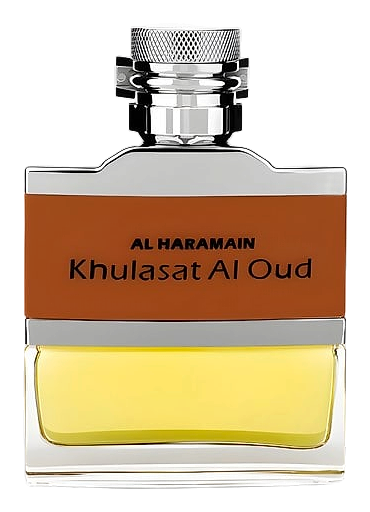
The name points toward oud, and the composition wastes no time confirming that intent. Al Haramain pulls rose, sugar, and aquatic notes into the opening, then steers hard into smoke and leather before the first half-hour is through. The sweet-rosy top and the dense, resinous base don't always live in the same house, but here they share a roof. The smoke is the bridge. It runs through everything, from the first ten minutes to the last whisper of labdanum on a coat collar the next morning. There's a specific moment, somewhere around the ninety-minute mark, where the sugar completely burns off and the leather takes on a dry, almost crackling quality, like leather cured over wood fire rather than something softer. That crackling is what the oud underneath has been waiting for.
What's interesting here is how the sugar and rose at the top get swallowed rather than leading. The smoke arrives fast, the leather pulls close, and the rose becomes a memory rather than a statement. The aquatic notes in the top pyramid add an unexpected coolness at the edges, a salinity that keeps the sweetness from tipping into syrup. It's a structure that rewards patience. Wear it for thirty minutes and you'll think it's one fragrance. Wear it for six hours and it's something else entirely.
The evolution
The opening is the most surprising part, and it doesn't last. Sugar and rose hit first, almost delicate, with a watery coolness underneath that gives the first five minutes an unexpected lift. Then the smoke arrives, and it arrives with intent. By the fifteen-minute mark, the leather has settled in alongside it, and the woody-citrus heart is humming underneath. The smoke is dense but not acrid, closer to smoldering wood than burning rubber, though a few wearers have compared it to burning tires with a sweet core. The heart holds for two to three hours, gradually losing the citrus brightness and leaning heavier into leather and wood. The drydown is where this fragrance earns its patience: amber, labdanum, and musk settle into a warm, resinous close that clings to fabric for the better part of a day. On skin, it fades after eight to ten hours. On a sweater or scarf, expect to catch it the next morning, softer, sweeter, almost like the ghost of the opening coming back around.
Cultural impact
Worn most in fall and winter, often at night, Khulasat Al Oudh has carved out a reputation as an accessible entry into dense, smoky oriental perfumery. Among wearers who lean toward oud-forward compositions, it gets noticed for how approachable it feels despite the heavy materials. The sweetness at the opening makes it less intimidating than a pure oud oil, and the smoke carries enough warmth to wear indoors without overwhelming a small room.