Chanterelle
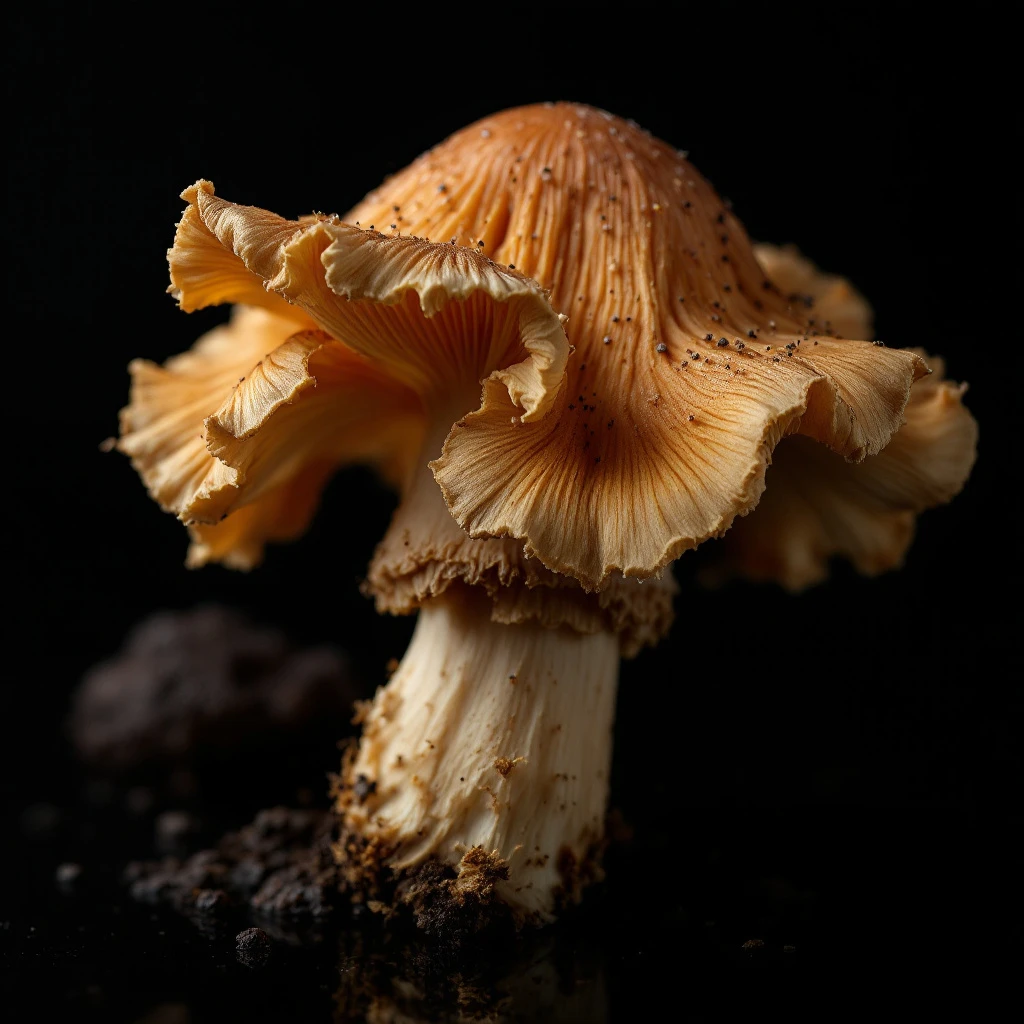
Chanterelle brings the forest floor into fine fragrance. This wild golden mushroom carries an unexpected apricot blossom sweetness with earthy undertones that add surprising depth to woody and floral compositions.
Character
How it smells
Wild forest apricot in a bottle
Unlike most mushrooms, chanterelles cannot be cultivated commercially. Every chanterelle in perfumery is hand-foraged from wild European forests.
Origin
France
Chanterelles have been gathered from European forests since at least the Middle Ages, appearing in medieval cookbooks as a prized seasonal delicacy. French and German foraging traditions developed sophisticated knowledge of optimal harvest conditions and preparation methods. Fine perfumery adopted chanterelle much later, driven by advances in solvent extraction that could isolate its aromatic compounds without the mushroomy notes present in raw fungi.
Modern fragrance chemists identified gamma-octalactone and related lactones as key aroma molecules, enabling more precise use in compositions. Today, chanterelle absolute remains rare and seasonal, available only when foragers collect wild specimens during summer through autumn.
Wears it best
Fragrances featuring Chanterelle
Brands
Brands known for Chanterelle
Good to know
Questions, answered
The essentials on Chanterelle in perfumery: how it smells, where it comes from, and how it behaves on skin.
What does chanterelle smell like?
Chanterelle has a distinctive apricot-like sweetness with floral and fruity undertones. The raw mushroom carries earthy, slightly peppery notes, but the extracted absolute emphasizes its sweet, jam-like quality with hints of underripe pear.
Is chanterelle a natural or synthetic ingredient?
Chanterelle absolute is a natural ingredient derived from wild-harvested mushrooms. Synthetic versions of its key aroma compounds, such as gamma-octalactone, exist for stability, but natural extraction captures a more complex scent profile.
What fragrances feature chanterelle?
Chanterelle appears in niche and luxury fragrances as a bridge between fruity and woody accords. It pairs particularly well with sandalwood, vetiver, and other earthy materials, adding unexpected sweetness to forest-inspired compositions.
Where does chanterelle grow?
Chanterelles grow wild across European forests, particularly in France, Germany, and Scandinavia. They form symbiotic relationships with trees, making commercial cultivation impossible. Harvest occurs from summer through autumn after rainfall.
How is chanterelle extracted for perfumery?
Solvent extraction of fresh or briefly dried chanterelle fruiting bodies produces a viscous absolute. Food-grade solvents capture the aromatic compounds while filtering out undesirable musty notes, resulting in the sweet, apricot-like absolute.
Is chanterelle sustainable?
Chanterelle harvesting raises sustainability concerns due to increasing demand and the impossibility of cultivation. Ethical sourcing requires supporting foragers who follow sustainable practices and avoid overharvesting from forest ecosystems.
What perfume families use chanterelle?
Chanterelle appears in forest, chypre, and certain oriental fragrances where it adds unexpected sweetness. It works particularly well in autumn and winter scent profiles, bridging fruity and earthy fragrance families.
Can chanterelle be cultivated?
No. Unlike button mushrooms, chanterelles cannot be commercially cultivated due to their mycorrhizal relationship with trees. They must be hand-foraged from wild forests, making them a seasonal and limited ingredient.