The Story
Why it exists.
The beginning
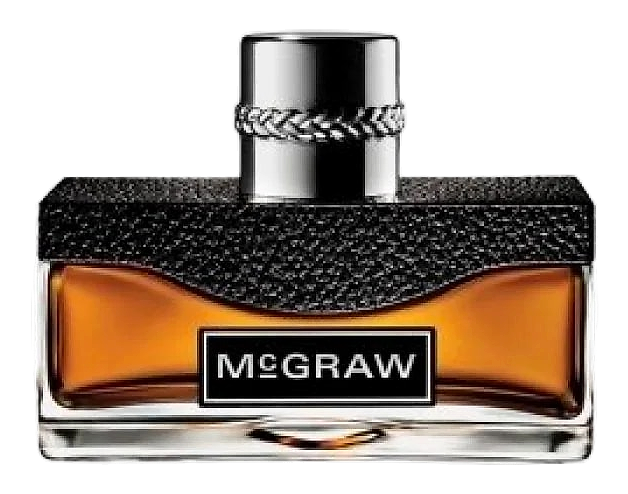
In 2008, McGraw by Tim McGraw arrived as his debut scent, developed with Coty and perfumer Ken Hirst. The whiskey accord in the base runs through the whole composition like a through-line. Bergamot and nutmeg open the door, lavender and moss do the heavy lifting in the middle, and the whole thing rests on sandalwood, amber, and that aged whiskey thread. Nutmeg's quiet spice gives the opening a low amber glow, while the lavender stays herbal and cushioned by artemisia rather than sharp or soapy. The moss keeps everything grounded, pulling the composition toward something that feels rooted outdoors rather than dressed up. In the base, the whiskey weaves alongside tonka bean and patchouli, and sandalwood closes the whole thing out with a creamy, dry warmth.
The structural choices in McGraw are worth a closer look. The nutmeg and artemisia give it warmth without resorting to the usual vanilla-amber shortcut, and that decision shapes the character of the drydown. The moss keeps it grounded and outdoorsy rather than polished. And the whiskey, treated as a base note rather than a top-note gimmick, does what good whiskey accords do in fragrance: it adds a fermented, slightly sweet grain note that reads as lived-in rather than loud. The interplay between the herbal heart and the woody-amber base is what gives the scent its momentum.
The evolution
The first twenty minutes are the bright ones. Bergamot arrives first, lifted by nutmeg's quiet warmth, and the whole opening reads as a clean, confident handshake. Then the lavender steps forward. Not the sharp, soapy lavender of an eau de cologne, but a softer, herbal version cushioned by artemisia and moss. The heart lasts longer than you'd expect, hovering for two or three hours before the base settles in. That's where the whiskey earns its place. It doesn't smell like a pour, but it smells like the warmth one leaves behind, woven through amber and patchouli with a sweet, almond-like thread of tonka bean underneath. Sandalwood carries the final stretch, creamy and dry at once. As the hours pass, the brightness of the bergamot fades completely, leaving the herbal softness of lavender and artemisia to linger on the skin before the base takes over.
Cultural impact
McGraw entered the men's fragrance market in 2008 and found its audience among wearers looking for something straightforward. Its composition leans on a herbal-woody backbone, with lavender and artemisia carrying the heart and whiskey-tonka-amber holding the base. That structural clarity is part of what makes it appealing. It became a go-to for guys who don't think about fragrance much, which might be the highest compliment a masculine scent can earn. The fragrance doesn't try to do too much, and that restraint gives it a quiet longevity in a category often crowded with louder launches.