The Story
Why it exists.
The beginning
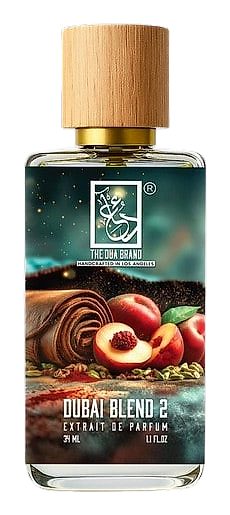
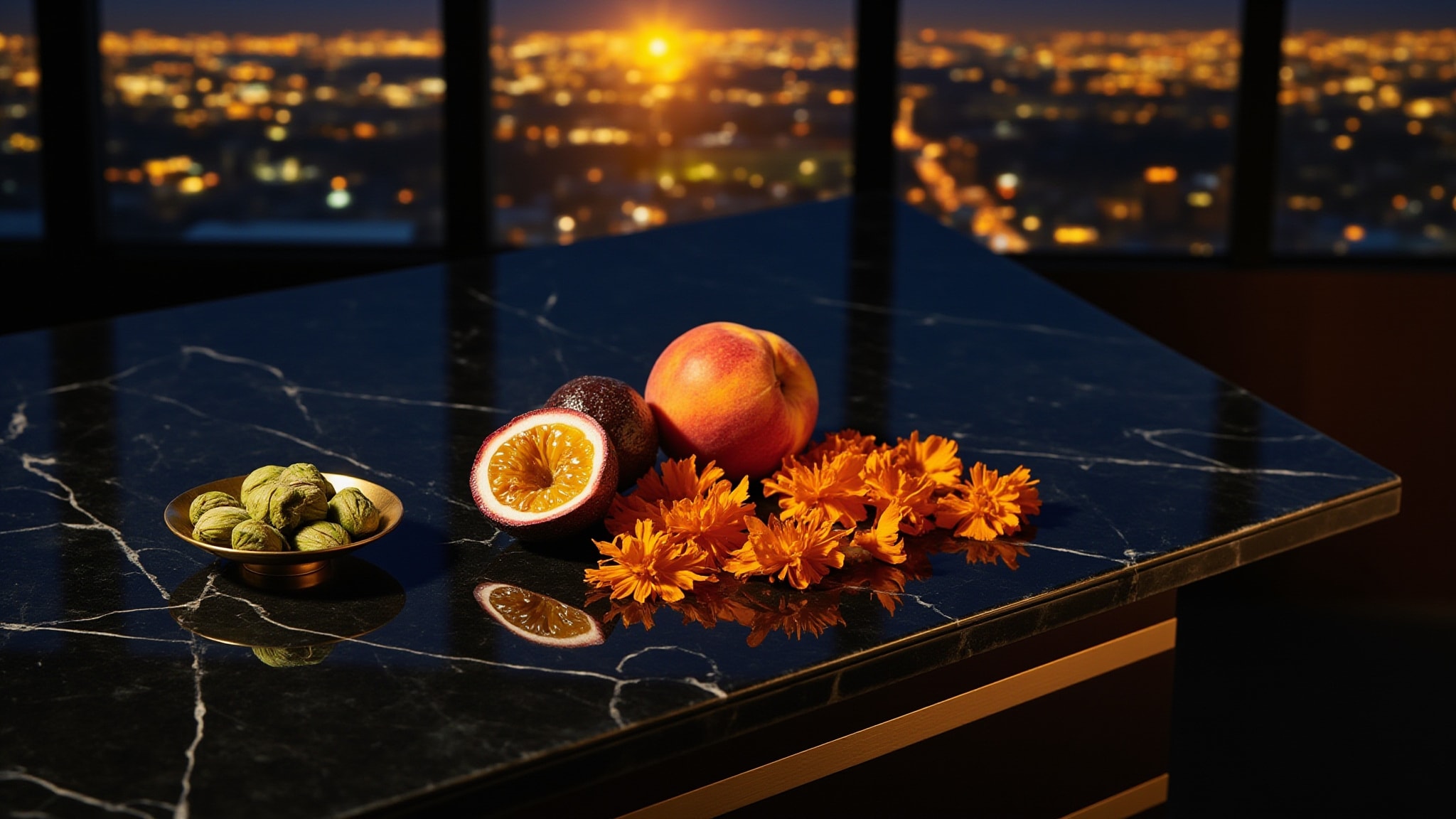
Dubai Blend 2 arrived in 2026 as part of The Dua Brand's Inspired Expression collection. Mahsam Raza, the nose behind the formula, composes with a clear sense of contrast rather than resolution. The opening throws cardamom, lemon, passion fruit, and peach at full volume, a vivid fruit-forward burst that announces itself before anything else has a chance to settle. There's nothing tentative about the first spray; the citrus and tropical notes land immediately, bright and unapologetic, with the cardamom threading a cool green spice through the sweetness. Peach rounds out the sharpness, adding a soft, fleshy quality that keeps the opening from feeling like a straight citrus cologne.
What makes this structure interesting is the gear shift baked into the design. The top reads almost gourmand-adjacent, the passion fruit and peach giving the first stretch a candied brightness that suggests the fragrance might stay sweet. Then osmanthus and violet step in, the osmanthus lending a soft apricot-leather quality that bridges the fruit and the base, the violet adding a powdery cool that keeps things from tipping too sweet.
The evolution
On skin the arc is fast and deliberate. The opening minutes are almost aggressive in their brightness, lemon and passion fruit cutting through with sharp clarity, cardamom giving the edges a green snap that keeps the sweetness from going flat. Peach softens the corners without dulling the impact. Then the shift happens, and the violet shows up first, powdery and cool, softening everything in its path. Osmanthus follows, and suddenly the fruit doesn't smell like fruit anymore. It smells like fruit that spent an afternoon near leather. The transition is one of the more satisfying things about wearing this fragrance, watching the tropical opening slowly get rewritten by something more textured and grounded. The base settles in gradually, and the oud makes its presence known without dominating.
Cultural impact
Dubai Blend 2 reflects a fragrance sensibility that has gained traction in recent years: compositions that open with approachable, crowd-pleasing notes and then deepen into something more challenging. The fruit-to-oud structure is part of a broader conversation happening in perfumery, where sweetness up top earns the right to go dark underneath, and where bright openings are used as a way to introduce wearers to materials like oud, leather, and dense ambers that might feel intimidating on their own.