The Story
Why it exists.
The beginning
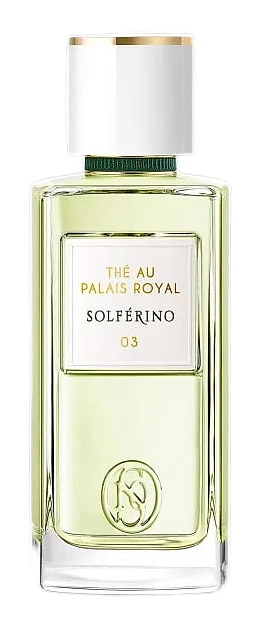
03 - Thé au Palais Royal is one of Solférino Paris's early numbered releases, and the brief is embedded in the name: tea at the Palais Royal. Jean-Christophe Hérault composed it in 2025 as the brand's opening conversation with calm. Solférino Paris arrived that same year under Interparfums, positioning the collection as a literal interpretation of Paris, treating the city itself as raw material rather than a vague muse. The perfumer was asked to capture the quiet hush that settles over a Parisian interior once the morning has softened, the particular brand of silence that belongs to gilded rooms with the curtains half-drawn. Hérault has a reputation for restraint, for compositions that breathe rather than broadcast, and this is one of his more meditative constructions.
Oolong and maté do the heavy lifting in the heart, two teas that lean different directions. Oolong brings that fermented depth, the slightly oxidised character that distinguishes it from greener leaves, the kind of note that reads as warm stone and dried leaf rather than anything bright or vegetal. Maté keeps it lifted, hay-like and softly grassy, pulling the composition upward so the oolong never collapses into something too sombre. Ambrette seed does something underrated in this structure: it carries the musky transparency of skin without ever smelling like synthetic musk.
The evolution
The first thirty minutes are all lift. Ambrette seed and bergamot arrive almost dry, a clean starched collar of a scent, mandarin adding just enough sweetness to keep it from feeling clinical. The citrus opening is brisk but never sharp, more the sensation of cool air through an open window than anything zest-forward. Then the handoff. Oolong and jasmine unfurl together, and the composition starts leaning warmer, the maté pulling a quiet grassy note through the center of the wear. What surprises is how long the jasmine lingers into the base, longer than most florals in this register, holding its shape even as the tea notes begin their slow descent. By hour three, the tea has softened into something skin-close, and vetiver arrives with a smoked-edge that reads more ash than grass, a dry mineral quality that keeps the drydown from feeling too sweet or too clean.
Cultural impact
Tea in perfumery has long carried a particular kind of expectation, the risk of feeling like a scented accessory rather than a serious composition. Thé au Palais Royal sidesteps that trap by treating oolong as a structural material rather than a decorative one, building the entire architecture of the fragrance around its fermented, slightly smoky character. The oolong is never buried under sweeter or louder notes; it remains the through-line from the opening handoff to the late base. This kind of commitment to a single ingredient reads as quietly radical in a market crowded with fragrances that gesture at tea without committing to it.