
The Story
Why it exists.
The beginning
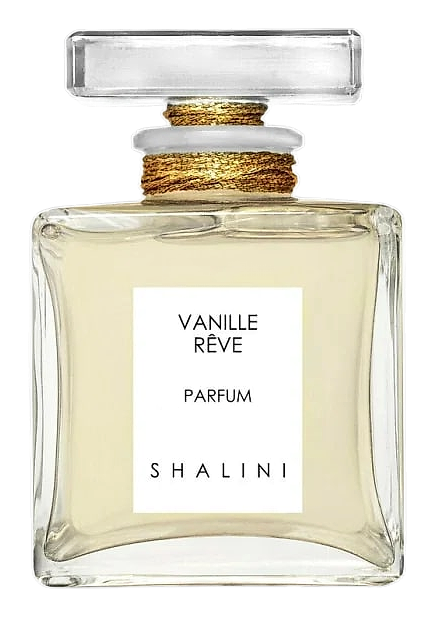
Shalini, the brand's very first fragrance, launched in 2004 as the opening statement for a house built on memory as material. The brief called for a composition that could function less like a scent and more like a kept moment, a private archive rendered in white flowers and warm woods. Handed to master perfumer Maurice Roucel, known for compositions that wear their richness without shouting, the concept was simple in theory and demanding in practice. The result is a parfum that reads as cool on the surface and incandescent underneath, built to be lived in rather than displayed. It set the tone for everything the house would release, establishing the white-floral-meets-woody architecture that defines the line.
What makes the composition unusual is the contrast between the opening's sharp green-cool lift and the narcotic warmth that follows. Coriander and neroli give it a crisp, almost metallic entry that reads more like cologne than classic floral, an herbaceous brightness that pulls the composition toward aromatic territory before the flowers arrive. Then tiare and tuberose sweep in with their full tropical weight, sweet and creamy, the kind of white-floral density that can overwhelm in less disciplined hands.
The evolution
The opening minutes are all green clarity, coriander slicing through neroli, almost aromatic, more herb garden than flower shop. The composition reads cooler than its eventual destination, a bright and slightly bitter entry that establishes structure before the florals claim their space. Once the white florals arrive, they arrive in earnest. Tuberose comes forward first with its narcotic sweetness, then tiare, the bouquet thickening into something creamy and sun-warmed, still carrying the cool green thread from the opening as a kind of backbone. The shift from green to white is gradual rather than abrupt, the top notes slowly ceding territory without ever fully leaving. As the composition settles, the white flowers begin to recede and sandalwood starts to surface, the musk softening everything into a quiet hum.
Cultural impact
The white floral heart places it in conversation with classic soliflore traditions, though its green-aromatic opening and sandalwood base give it a distinctive structure. Wearers tend to be people who want their fragrance to be a private thing, noticed only by those already close. The composition rewards proximity rather than projection, sitting closer to the skin than many of its white-floral peers. It's the sort of scent that reveals itself slowly, asking for attention rather than demanding it. The green-to-creamy-to-woody arc gives it a narrative quality, almost like reading a short story in three movements.