The Story
Why it exists.
The beginning
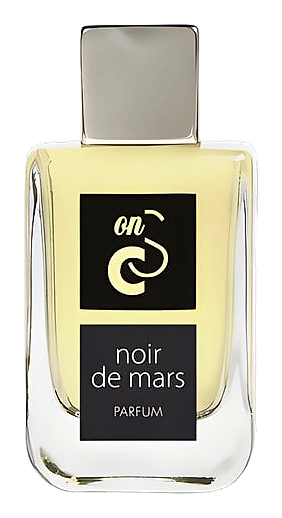
Noir de Mars carries the name of a pigment and translates it into something you wear. Jordi Fernández, known for his oriental compositions, built the scent around Laotian oud, a raw material whose price swings wildly and whose character shifts depending on where it's sourced. Fernández and Beatrice Aguilar traveled through Indonesia, Cambodia, Vietnam, and Thailand chasing a grade of oud rich enough to anchor the whole composition. The raw resinous density of Laotian oud dominates from the first impression, weighed down further by smoky cypriol, while guaiac wood and sandalwood add their own gravitational pull. Gurjun balsam folds into the structure with a resinous depth that thickens the air around the wearer.
What makes Noir de Mars unusual isn't just the oud, it's how the materials around it behave. Cypriol contributes an earthy root character, a damp and slightly muddy quality that pulls the composition downward and keeps it from floating into pure smoke. Gurjun balsam brings a woody, resinous depth that thickens the heart into something dense and difficult to ignore. Haitian amyris in the base softens the drydown with a quiet, warm woodiness that keeps the leather from going sharp.
The evolution
The first spray announces itself without ceremony. Oud, cypriol, guaiac wood, and sandalwood arrive together, and the effect is less an opening than a statement of intent. There's smoke here, but it's the smoke of something burning slowly underground, not a quick flame. As the composition settles, the myrrh surfaces, sweet and resinous, and the leather underneath starts to read as texture rather than material, more like the smell of a saddle left in the sun than anything tanned. The heart phase holds dense and deliberate, a long stretch where the smoke and sweetness wrestle for dominance without either winning outright. As hours pass, the oud has quieted into something warmer and more lived-in, and the Haitian amyris begins pulling the composition toward its base. The final hours are a low ember of amber, sandalwood, and residual smoke that stays close to the skin.
Cultural impact
Noir de Mars draws on materials that give it a distinct voice. The cypriol and the gurjun balsam pull the composition toward earth and resin rather than the more familiar sweetness of saffron and rose, creating a scent that feels grounded and ancient rather than ornamental. Wearers tend to describe it less as a fragrance and more as a place, somewhere mineral and old, lit by a fire no one is tending. The combination of raw Laotian oud with smoky cypriol and resinous gurjun balsam creates something that reads as deliberate and uncompromising, built for someone who values density over decoration.