The Story
Why it exists.
The beginning
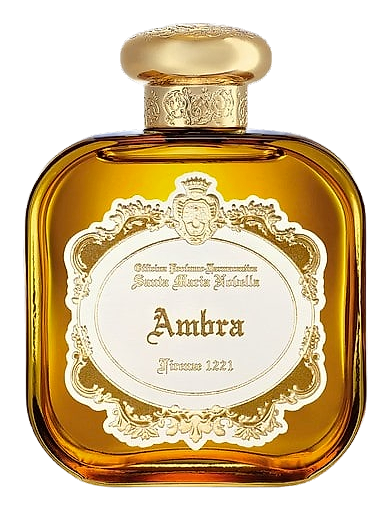
Ambra arrived in 2024 as a quiet study in contrast from Santa Maria Novella, the Florence-based house whose roots reach back into the old European tradition of herbal pharmacy and scented waters. The composition reads as a meeting rather than a simple blend. Bergamot, bright and clean, opens the door, and amber and myrrh follow, deep and resinous, carrying the kind of warmth that has marked incense materials for as long as anyone has burned them. The house launched Ambra as an eau de parfum, but the drydown behaves like something heavier and more deliberate, richer than its classification suggests. The opening citrus gives it a clean, almost architectural clarity, while the resins below add depth and gravity. There's nothing forced in the way these two worlds come together.
What makes Ambra interesting is the restraint on display. Amber and myrrh could overwhelm in less careful hands, but here the bergamot acts as a counterweight at the top, preventing the resin from collapsing into sweetness. The base, sandalwood and patchouli, grounds the composition in something woody and slightly damp, the soft cream of sandalwood meeting the earthier darkness of patchouli. The pyramid is simple: bergamot, amber, myrrh, sandalwood, patchouli. Just five materials, each carrying its own weight without crowding the others.
The evolution
The opening belongs entirely to the bergamot, sharp and bright, almost like peeling citrus in a cold room. The juice has that clean, slightly bitter edge that good bergamot carries, green and sunlit at once. Then the handoff begins. Amber arrives not as a single identifiable note but as a slow warmth rising underneath, the way resinous wood releases scent when you hold your hands over a candle flame. Myrrh threads through the middle phase, dry and faintly medicinal, like cracking open an old apothecary jar and catching that distinctive bittersweet edge, neither sweet nor sharp but somewhere quietly between. As the composition wears on, it shifts toward its base: sandalwood rounds the edges with its characteristic creamy softness, and patchouli darkens the floor, adding a touch of damp earth beneath the resins.
Cultural impact
Ambra sits in an interesting lane for a house best known for its traditional scented waters. It reads as the wearer's quiet nod to resinous perfumery, eastern-inspired warmth filtered through the clean citrus lens of a Florentine house, without the heavy theatricality that often accompanies big amber launches. There's nothing loud about it, no syrupy sweetness, no aggressive projection, just a steady warmth that stays close and rewards the people close enough to catch it. Wears best on someone who treats scent as atmosphere rather than announcement, the kind of person who lights a candle for company and lets the room do the rest.