The Story
Why it exists.
The beginning
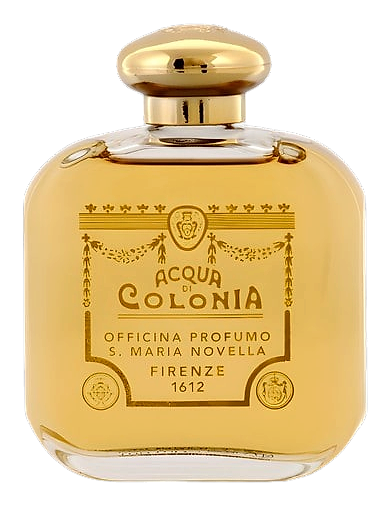
Marescialla arrived in 1828, named for a local military commander, a curious choice for a Florentine pharmacy. But Santa Maria Novella had already spent six centuries learning that the most interesting formulas came from unexpected places. The name was a signal: this house made things on its own terms. No apology. No compromise. Marescialla was one of the earliest fragrances to carry the pharmacy's botanical rigor into something that could be worn, not just prescribed. The formula drew from the same apothecary traditions that had served the Medici court, tinctures, balms, oils pressed from herbs grown in Tuscan valleys. But 1828 was also the year the workshop began to think of itself as something more than medicinal. Marescialla was the evidence.
The note structure is unusual. Mace, the outer husk of nutmeg, opens instead of the more common citrus or herbal accord. It's warm spice, yes, but with an edge that most 19th-century compositions avoided. The Rosa centifolia in the heart doesn't perform the way rose usually does. Here it's woody, almost tannic, woven through cedar rather than floating above it. And the base leans into oakmoss and patchouli in proportions that give the fragrance its longevity but also its polarizing edge. This isn't a formula that tries to please everyone. It was built to last, on skin and in memory.
The evolution
Marescialla opens with a jolt. Citrus oils and mace arrive together, sharp and herbaceous, that astringent quality that makes people pause. The mace is the tell. It's the moment where you either commit or you don't. Some wearers describe this phase as medicinal, even aggressive. Others find it exhilarating. The 30-minute mark is where the hand-off happens. The rose emerges, but it's not soft. It's woody, grounded, threaded through cedar in a way that feels structural rather than decorative. The citrus fades. The cedar takes the foreground. The drydown is where Marescialla earns its reputation. Oakmoss, patchouli, and sandalwood settle into the skin for a mossy-woody base that can last 8-10 hours. On fabric, some wearers report detecting it the next day. The sillage is moderate throughout, close, never shouting. But it lingers.
Cultural impact
Marescialla occupies an unusual position: a fragrance that has been in continuous production since 1828, yet remains polarizing. The sharp mace opening and medicinal character divide opinion sharply, some find it repulsive, others find it magnetic. What unites those who love it is patience. The formula rewards wearers who stay through the opening and discover the cedar-rose heart underneath. In a fragrance landscape that increasingly optimizes for immediate likability, Marescialla is a reminder that some compositions were built to be lived with, not just sampled.