The Story
Why it exists.
The beginning
Tocade arrived in 1994 from Maurice Roucel. The idea was a fragrance that feels chosen rather than worn for effect. Serge Mansau designed the bottle, giving the flacon a sculptural form. Marcel Rochas once said a woman should be smelt before she's seen. Tocade is that philosophy made warm and powder-soft, built for the hour after you've stopped trying.
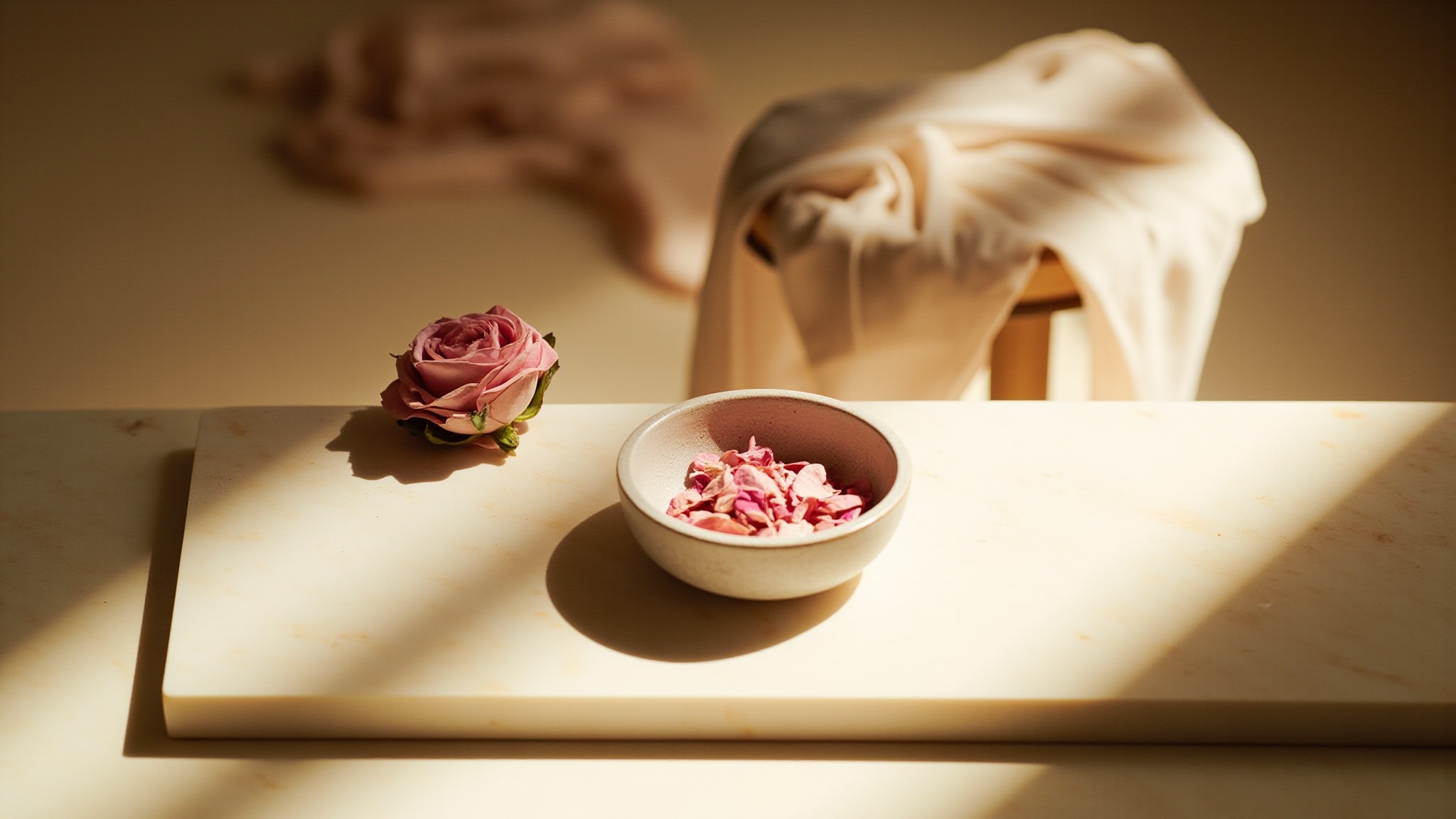
The composition hinges on a contradiction the perfumer made work: rose and vanilla. One is floral, bright, almost sharp in its natural state. The other is sweet, warm, gourmand. Together they should clash. Instead, the rose goes powdered, iris-soft, losing any sharpness, while the vanilla doesn't dominate the top, but arrives late, warming the florals from underneath. The iris does the real work. It absorbs the sweetness, prevents the rose from reading as candy, and gives the whole thing a slightly dry, powder-dust quality that keeps it classical rather than sweet.
The evolution
The opening arrives with bergamot and geranium, green and almost herbal, a brightness that cuts before it softens. The green notes fade within the first half hour, making way for the heart where rose and iris take center stage, with jasmine and magnolia underneath. The lily of the valley stays quiet, more implied than announced. Then the base arrives as the florals begin to fade, vanilla and amber emerge, wrapping around patchouli and cedar. The musk clings close, skin-warm and intimate, designed to be discovered rather than proclaimed.
Cultural impact
Tocade presents a powdery floral profile softened by warm vanilla and amber. It's a style that can read as dated, old-fashioned vanity, grandmother's dressing table, yet Tocade's execution prevents it from feeling like a relic. Maurice Roucel crafted something assured enough to transcend nostalgia. For those who love powdery florals, this is essential territory. For those who avoid them, the warmth and proximity to skin may prove too much.