
The Story
Why it exists.
The beginning
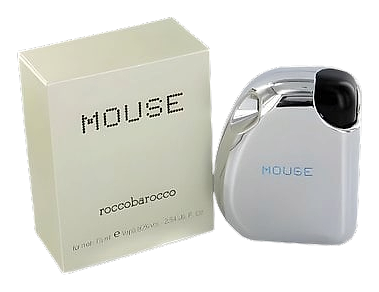
Mouse Cologne landed in 2001, and the name alone tells you Roccobarocco wasn't interested in playing it safe. Perfumer Maurizio Cerizza built this around a single idea: a men's fragrance that didn't follow the expected naming conventions of its era. The scent opens bright and citrus-forward, with yuzu and tangerine providing an immediate lift that feels both clean and unexpectedly sophisticated. There's a tropical sweetness from pineapple that keeps the citrus from reading as generic, while underlying aquatic notes hint at something more complex beneath the surface. As the top notes begin to settle, the fragrance reveals its aromatic heart, where lavender and herbal notes emerge to add depth without overwhelming the composition.
The star anise in the heart is the quiet wildcard here. Fougère structures typically lean on lavender, coumarin, and oakmoss to build their aromatic backbone, and Mouse Cologne incorporates these elements while introducing something unexpected. Star anise reads as cool and slightly medicinal from a distance, carrying a faint sweetness that surprises anyone expecting only herbs and citrus. It's the kind of ingredient choice that makes someone lean in rather than pull back, a subtle complexity that rewards attention.
The evolution
The opening arrives fast, yuzu and tangerine hitting within seconds, pineapple adding a faint tropical sweetness that keeps the citrus from reading as cleaning product. That brightness holds before the lavender and black pepper emerge from the heart, pushing the composition into aromatic territory. The rosemary and star anise add complexity that sets this apart from simpler fresh fragrances of its era. As the heart develops, the sandalwood and cedar begin to establish themselves, with ambergris providing a subtle marine lift that prevents the drydown from going flat. Patchouli and musk anchor everything, creating a warm foundation that hangs close to the skin. What surprises is the ambergris, unexpected in a fragrance that opens so brightly with citrus. The drydown rewards the patient wearer, revealing depth that wasn't apparent in the first spray.
Cultural impact
Mouse Cologne occupies an interesting space in Italian men's fragrance history. The name is its own statement, playful in a category where most releases took themselves more seriously. In a market where men's fragrances often leaned toward predictable aquatic or spicy territories, this one offered something different without becoming inaccessible. The fragrance doesn't try to be the loudest in the room. It wears quietly, performs consistently, and rewards the wearer who pays attention.