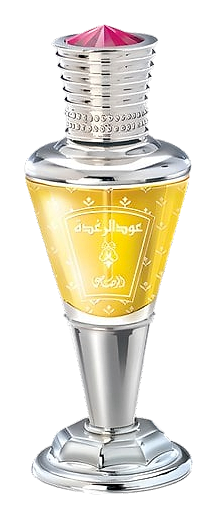
The Story
Why it exists.
The beginning
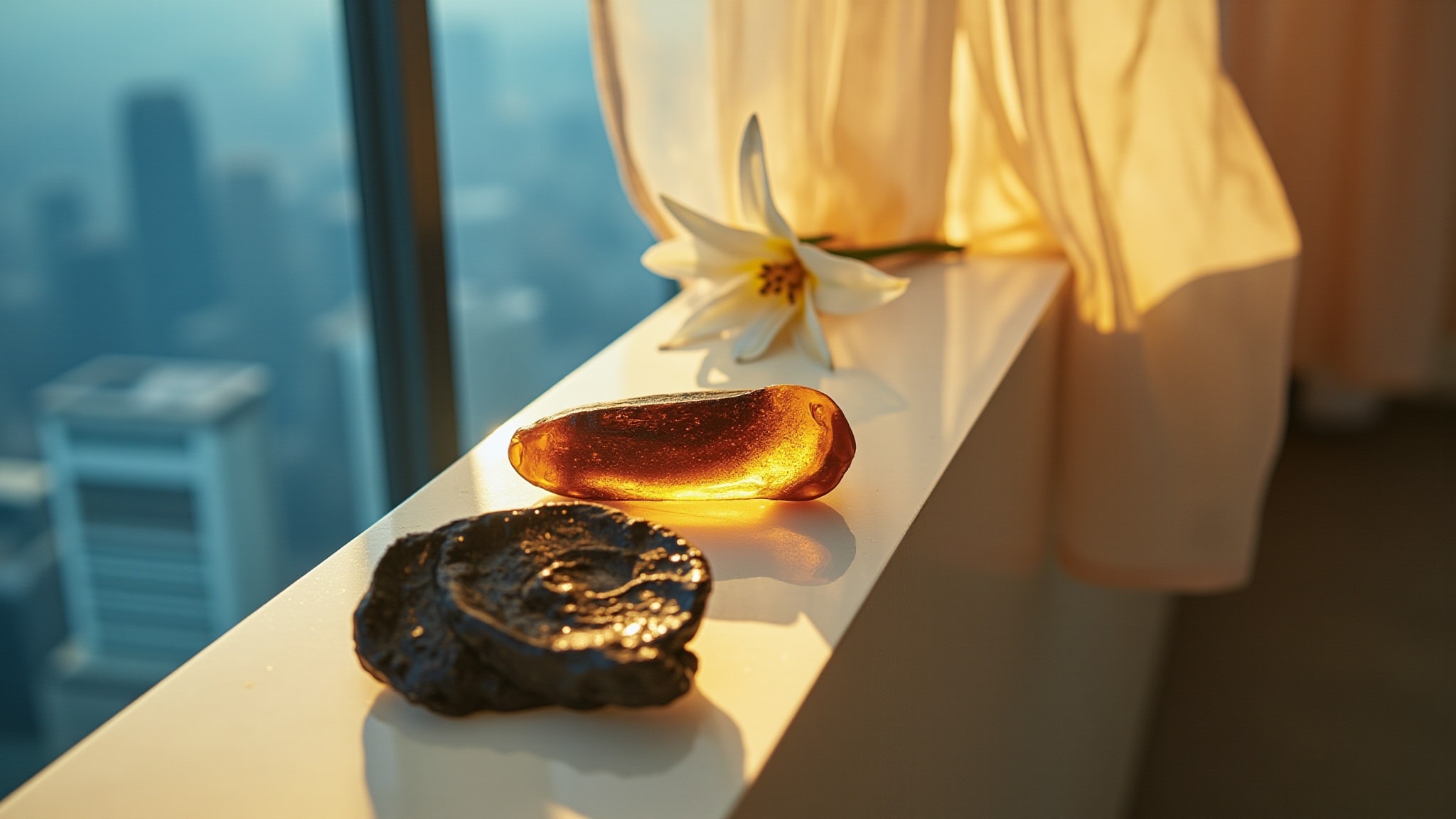
Oudh Al Raghda centers on a fundamental tension in perfumery: the heavy, resinous weight of precious agarwood set against the airy lift of Himalayan lily and the bright tartness of currant buds. The combination creates something unexpected, white florals given room to bloom alongside something older and more serious. It's a fragrance that refuses to commit fully to one register, oscillating between the delicate and the dense, the immediate and the lingering.
What makes the structure interesting is the reversal. Here, the florals arrive first, overwhelmingly, almost confrontationally, before the oud and ambergris claim the drydown. The Himalayan lily is not a subtle bridge. It's a statement: this fragrance will announce itself before it settles. The blackcurrant leaf in the opening reinforces that energy, adding a green, almost vegetal sharpness that keeps the tuberose from becoming cloying. By the time the woody-oud base arrives, the florals have done their work, they've declared something, and now the oud is there to prove it meant it.
The evolution
The opening brings lift and brightness, tangerine and ginger cutting through the green currant notes, a spicy-fruity entrance that announces itself clearly. Then the florals arrive. Not gradually. Tuberose and ylang-ylang hit almost simultaneously, and for a while this smells like an entirely different fragrance, lush, almost aggressive in its whiteness. The orange blossom adds a bitter-floral edge that keeps it from becoming purely sweet. The transition is not gentle. One moment you are in a garden; the next you are in something older, resinous, close to skin. The drydown settles into warm wood, a whisper of musk, the oud refusing to fully leave.
Cultural impact
Oudh Al Raghda brings a distinctive approach to its composition, leading with a bright currant-green opening before committing to the oud-ambergris base. The perfume layers traditional perfumery complexity with a structure that offers clear progression and recognizable stages. Community forums have continued to reference it as an example of bold Rasasi craftsmanship.