
The Story
Why it exists.
The beginning
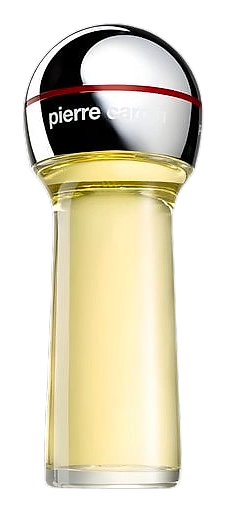
Pierre Cardin launched Pour Monsieur in 1972 as a men's fragrance from his Paris fashion house. The fragrance was conceived as a composition built around contrast, fresh citrus and lavender against warm amber and leather, creating a tension between opposite poles that defines the scent's character. The bottle reflects the same design principles that informed Cardin's clothing: angular, modern, unmistakable. Pour Monsieur arrived as a statement of intent from a house that had established itself in fashion and now extended its reach into scent, recognizing the potential for fragrance to capture the same innovative spirit that defined its apparel collections.
What makes Pour Monsieur distinctive is the structural balance between its aromatic top and its leathery base, a composition that refuses to choose between fresh and warm. The lavender-citrus opening is assertive, almost bracing, but it never announces itself as the main event. Instead, it clears the way for a heart of leather and sandalwood softened by carnation and geranium, giving the fragrance a powdery floral undertone that keeps the leather from becoming heavy.
The evolution
The opening arrives crisp and immediate. Lavender and citrus, bergamot, orange, lemon, hit the skin within seconds, with basil adding a slight green bite that keeps everything fresh. Not sweet. Not aquatic. The kind of freshness that smells like it belongs in a specific kind of room. Shortly after the heart develops. Leather and sandalwood arrive first, then carnation and geranium introduce a warm, slightly spiced floral note that rounds everything out. The iris is subtle here, it adds a powdery softness rather than a distinct character of its own. As the fragrance settles, the drydown dominates. Oakmoss anchors the composition, amber adds warmth, and vanilla and benzoin create a soft, powdery sweetness that lingers close to the skin. The leather never fully disappears, it breathes beneath the warmth like a foundation.
Cultural impact
Pour Monsieur holds a specific place in masculine fragrance history as an aromatic-leathery composition from the early 1970s. The fragrance is appreciated today for its balance of warm and fresh elements, maintaining a coherent structure across its full development on skin. Its combination of aromatic and leathery notes creates a scent that remains distinctive among masculine fragrances of its era and subsequently. The interplay between the citrus and lavender top notes against the leather and amber base creates a tension that keeps the fragrance engaging throughout its wear, neither overwhelming in its freshness nor heavy in its warmth.