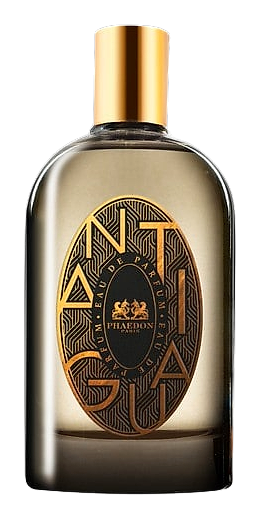

The Story
Why it exists.
The beginning
Antigua takes its name from the Caribbean island, but its heart belongs to the Mediterranean. Pierre Guillaume built this as a deliberate provocation, a chypre that refuses to sit quietly in its own family. The 2013 launch was part of a quartet, each scent anchored in a distinct locale, and Antigua was the one that refused to be pinned down. Where other fragrances in that collection reached for smoke or spice or coastal air, this one reached for something harder to hold: the moment fruit becomes landscape, before the heat takes over.
The unusual choice of guava as a lead note sets this apart from the standard chypre playbook. Most fragrances in this family open with bergamot or citruses and build toward moss and patchouli. Antigua flips the sequence, the guava arrives volatile and tropical, almost aggressive in its brightness, before the classic chypre structure catches up underneath. The white peach in the heart adds sweetness without softness, and the fig leaf keeps everything grounded in green. It's a composition that earns its "difficult to classify" description by refusing to commit to any single territory.
The evolution
The opening hits like a Caribbean market at noon, guava, grapefruit, lime, and bergamot arriving together in a volatile rush. The citrus oils cut sharp while the guava adds an unexpected tartness that carries across a room. This phase lasts a solid hour, maybe longer on cooler skin. The heart arrives gradually: white peach and fig leaf emerge through the fading citrus, their sweetness tempered by rose petals that prevent the whole thing from becoming saccharine. The green notes from the fig leaf keep the florals honest. By the drydown, the oakmoss and vetiver have settled into a foundation that reads more earthy than green, not mineral, not marine, just warm stone and damp earth. Patchouli adds depth without going dark, and the vanilla-musk combination provides a warmth that lingers close to the skin for hours. This is a fragrance that starts loud and ends intimate.
Cultural impact
Antigua arrived in 2013 as part of a deliberate movement in niche perfumery toward fruity-chypre hybrids that refused to be categorized. While guava had appeared in mainstream fruity-florals, it was unusual to encounter it as the lead note in a composition built on an oakmoss and patchouli base. Phaedon positioned the fragrance alongside Tabac Rouge, Rouge Avignon, and Lentisque in a quartet that mapped different global territories, each with a distinct olfactory identity. Antigua's territory was the Caribbean, and the guava note carried cultural weight beyond its tropical associations.