The Story
Why it exists.
The beginning
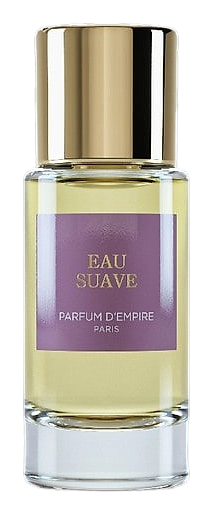
Marc-Antoine Corticchiato didn't want another polite rose. In 2005, he reached for the tea rose, Rose de Malmaison, a variety less common than damask, softer and more blanched than the usual suspects. The idea was to build a rose that revealed little-known facets: not just the floral, but the fruity, the spiced, the slightly dirty. That's where the coriander, saffron, and black pepper came in. Not decoration. Contrast. Eau Suave was the answer to a question most perfumers don't ask: what happens when you stop trying to make rose smell like rose?
The tea rose at the center of Eau Suave is the real departure. Unlike damask or centifolia, Rose de Malmaison carries a cooler, more almond-tinged floralcy, less honeyed, more geometric. Corticchiato amplifies this by pairing it with red berries and peach in the heart, letting the fruitiness turn the rose slightly tart instead of sweet. Then the spices push back: saffron and coriander in the opening, black pepper threading through the heart. The result is a rose that reads modern without chasing modernity, fruity-spicy, grounded in oakmoss and patchouli, refusing the easy path of powdery floral.
The evolution
Eau Suave opens sharp. Coriander and saffron hit first, herbal, warm, slightly medicinal before the rose materializes. Thirty minutes in, the tea rose arrives cleaner than expected, but the red berries are already surrounding it: raspberry's tartness, peach's fleshy sweetness. The black pepper emerges as a quiet heat that never dominates. By hour two, the rose and fruit have settled into a warm hum, and the oakmoss starts to show, that mossy, slightly earthy anchor that gives chypre its structure. The patchouli underneath is present but not heavy; this isn't a dark fragrance. What lingers longest is the vanilla and white musk in the base, close to the skin, intimate. On fabric, the oakmoss holds. On skin, expect six to eight hours of a rose that stayed past its welcome, in the best way.
Cultural impact
Eau Suave arrived in 2005 as part of the Collection Classique, a period when niche perfumery was still finding its footing outside France. The composition stood out for treating rose as a starting point rather than a destination, fruity, spiced, grounded in chypre structure rather than floating in aldehydic florality. Wearers who remember it often describe it as the fragrance that changed how they thought about rose.