The Story
Why it exists.
The beginning
The stone is dense, opaque, dark, but veined with threads of something luminous. That's the idea here: light and shadow as a single material. Fabrizio Tagliacarne built the fragrance around this duality, starting with an aromatic freshness that pulls from lavender, citrus, and a clean minty-green current. It's the bright face of something that has other plans. The fresh opening gives way to a deeper, warmer base that arrives on its own schedule, and the tension between them is what makes the fragrance compelling. There's a natural negotiation happening throughout the wear, a back-and-forth between brightness and depth that keeps the composition alive.
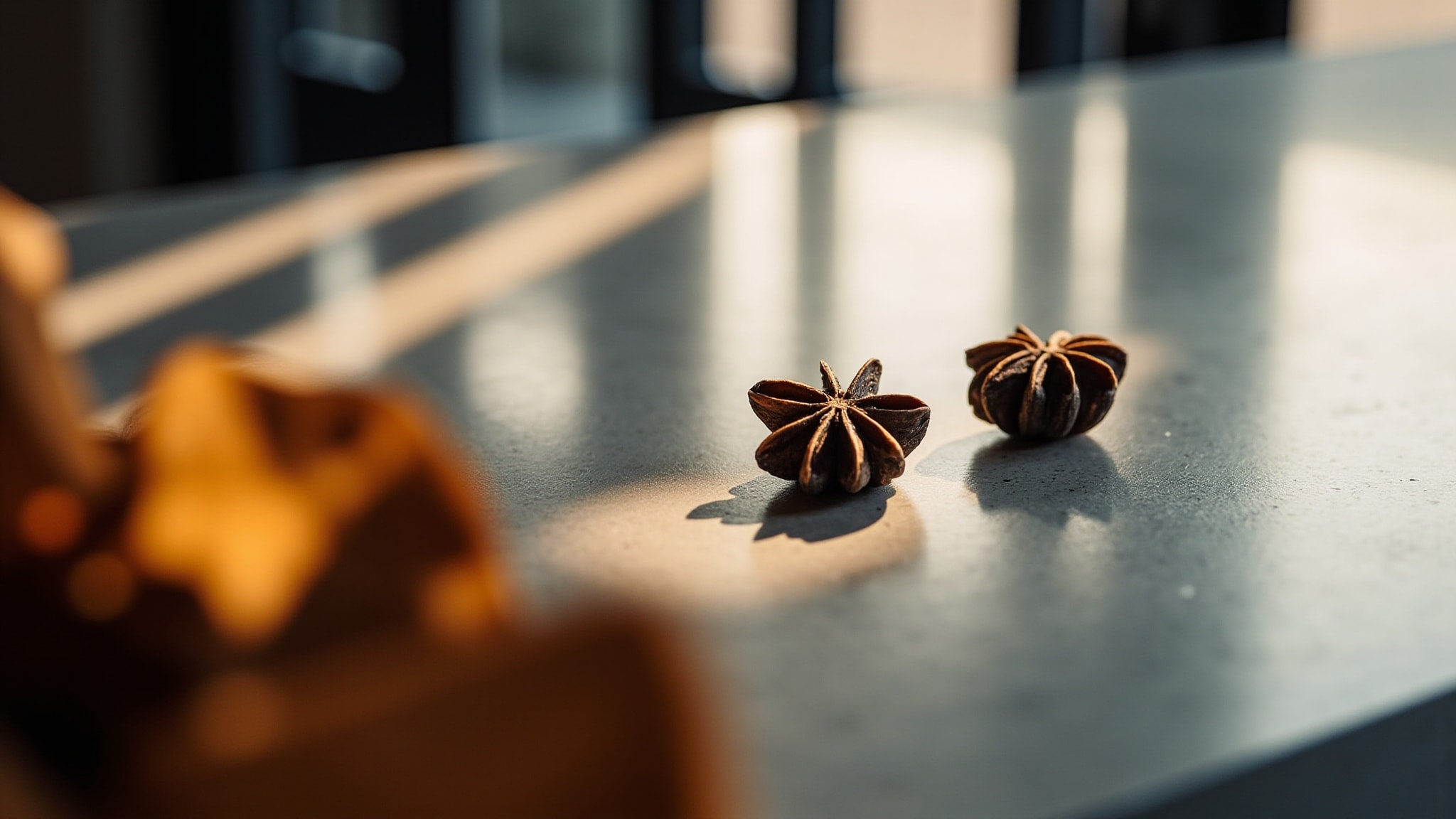
Anise and licorice sit in the top accord alongside peach and pineapple, a combination that reads more playful than the stone's name suggests. But those sweet-fruity facets don't linger. They give way to geranium, jasmine, and hyacinth, a floral heart that cools rather than warms. The base anchors everything in musk, cedarwood, sandalwood, and amber. The effect is linear in the best sense: a slow, deliberate arc from brightness to depth, with no jarring transitions. What makes it work is the mint threading through each phase, keeping the composition coherent even as the character shifts.
The evolution
The opening arrives crisp. Citrus, lavender, a sharp green note that reads as mint. Peach shows up briefly, sweet, soft, almost accidental. Then it recedes and the composition begins its quiet shift. The floral heart doesn't announce itself. It settles in gradually, cooler than the top, with geranium providing the bridge. Hyacinth adds a slight aquatic edge that keeps things interesting. By hour three, the base begins to dominate. Cedarwood and sandalwood arrive together, warm and dry. Amber underneath. Musk that stays close to the skin. The slow arc from brightness to depth unfolds without jarring transitions. The transition from minty-green to warm-woody takes time. No rush. The stone was always going to speak in the end.
Cultural impact
Onice arrived in 2005, before the brand's official formation, suggesting the house's catalog was seeded with work that pre-dated its formal identity. Among the Omnia Profumi lineup, Onice occupies a particular position: named for onyx but built from brightness, it represents the duality that runs through the brand's philosophy. The fragrance has since been discontinued, which has made it harder to find but has also given it a particular appeal for collectors who seek out the house's earlier work.