The Story
Why it exists.
The beginning
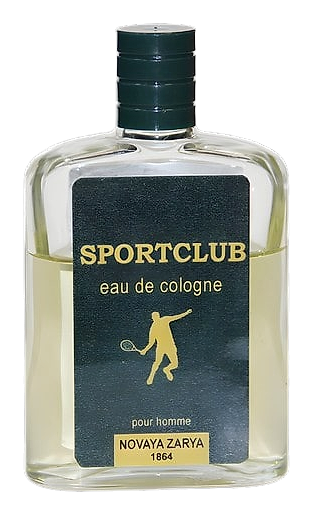
Sportclub arrived in 1970, when Novaya Zarya was the dominant domestic fragrance house in the Soviet Union and fougère was the default language of masculine perfumery, East and West alike. The house understood that men in 1970 wanted something with presence, but not necessarily sweetness. The composer's choice to lead with bergamot and basil, amplified by aldehydes and sharpened by anise, was deliberate. This wasn't a flattering scent. It was an interesting one. Anise in a Soviet men's fragrance was unusual, the licorice note tends to divide. Here, it functions as a quiet warning: this isn't going to be polite. The apple and peach arrive in the heart not to sweeten the deal but to soften the edges without surrendering them. Oakmoss and patchouli provide the backbone, the solid, mossy foundation that Soviet-era masculinity demanded. Honey and vanilla in the base are the surprise: a warmth that arrives late, earned rather than announced.
What makes Sportclub structurally interesting is the aldehyde placement. In most fragrance traditions, aldehydes function as a bright, effervescent lift, they arrive, they elevate, they fade. Here, they do something different. The aldehydes arrive sharp, almost confrontational, carrying a waxy, slightly medicinal quality that doesn't soften into powder as the heart develops. Instead, they persist, a green, slightly harsh edge that keeps the composition honest. Combined with anise, this creates a top section that reads more bitter than fresh, more green than clean. The honey and vanilla in the base don't soften this character so much as coat it.
The evolution
The opening is the statement. Bergamot and aldehydes hit first, bright, waxy, slightly medicinal. Basil and thyme arrive within seconds, green and herbal. Anise lingers as a quiet counterpoint for the first thirty minutes. The aldehydes don't fade gently here, they evolve. What begins as citrus-lift becomes something sharper, more confrontational, as the green herbs take over. This is the vintage tell. For the next two to three hours, the heart opens: apple and peach arrive soft, jasmine and carnation add an unexpected floral richness, ylang-ylang rounds the edges. The green character doesn't disappear, it integrates, settling underneath the fruit and florals like a ground floor you've walked on your whole life. By the fourth hour, the drydown arrives. Oakmoss and patchouli provide the classic chypre foundation. Honey and vanilla introduce warmth that was absent from the opening. The vanilla stays close to skin for the final three to four hours, a quiet, intimate finish that doesn't announce itself. What surprises is the aldehyde persistence.
Cultural impact
Sportclub occupies a specific niche: the collector's Soviet fougère. It's not mainstream, it's sought after by those who understand what they're smelling. Wearers describe it as the scent of someone who values character over trend, authenticity over polish. The aldehydes and anise create a confrontational opening that reads as either vintage authenticity or dated sharpness depending on your perspective. What nobody disputes is that it's different. In a market saturated with safe, sweet masculinity, Sportclub still asks something of the wearer.