
The Story
Why it exists.
The beginning
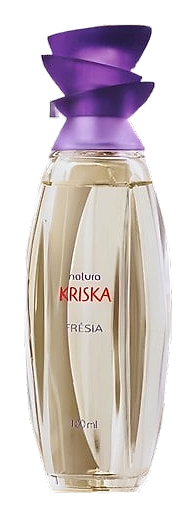
Kriska Frésia arrived in 2008, crafted by Verônica Kato for Natura's expanding Kriska collection. The brief was deceptively simple: translate the tension between natural freshness and classic femininity into a wearable composition. Bergamot and cool herbs on one side, lush florals on the other. The name Frésia, freesia, anchors the idea in a single bloom, but the fragrance was always designed to be more than a single flower portrait. It was about the transition itself, the exhale after a garden walk.
What makes Kriska Frésia distinctive is the sheer density of its heart. Five floral materials, Bulgarian rose, freesia, jasmine, lily of the valley, orange blossom, layered without crowding. The result reads as a garden, not a note list. This density is unusual; most contemporary florals foreground one or two materials and build around them. Kriska Frésia lets them argue, then resolves the tension through a warm, powdery base of benzoin, bourbon vanilla, and sandalwood. The cool-to-warm arc isn't subtle. It's the whole point.
The evolution
The opening arrives crisp and green. Bergamot, geranium, and lavender present themselves cleanly, a moment of cool air before anything blooms. The cardamom adds a quiet spice that stops the herbs from reading as soapy. This cool phase holds for twenty to thirty minutes before the florals overtake it. Bulgarian rose and freesia arrive together, dense and slightly powdery, almost overwhelming before they settle. The heart on Kriska Frésia is where most people make their decision about the fragrance. It is lush. Unapologetically so. The drydown softens everything. Benzoin and bourbon vanilla coat the florals in warmth, sandalwood and musk keep it close to the skin. This is not a fragrance that announces itself from across a room. It waits for you to lean in.
Cultural impact
Kriska Frésia stands as one of Natura's most enduring floral compositions since its 2008 debut, representing the brand's ability to build density and complexity within a warm, approachable structure. The fragrance occupies a specific space in the Brazilian fragrance landscape, not avant-garde, not purely classical, but something that feels rooted in place while remaining broadly wearable.