The Story
Why it exists.
The beginning
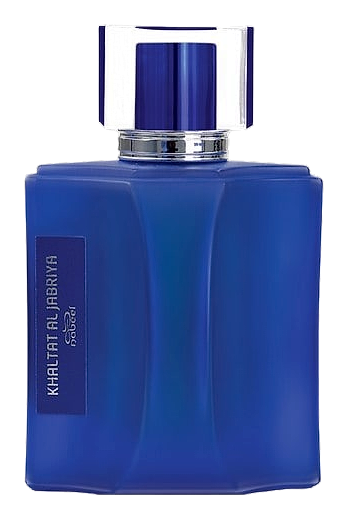
Khaltat Al Jabriya by Nabeel is a 2017 release, and the name does the work here. The brief reads less like a marketing concept and more like an exercise in excess done right: stack the roses, let the saffron thread between them, then drop the full weight of oud into the center and see what survives. It is composed by Asghar Adam Ali, and it sits firmly inside the rose-oud lineage that dominates Arabic perfumery. The composition is dense, layered, and unapologetic, pulling together Bulgarian rose, Turkish rose, Damask rose, sweet orange, bergamot, saffron, agarwood, sandalwood, vetiver, nagarmotha, benzoin, vanilla, castoreum, leather, and patchouli.
What separates this from the crowded rose-oud shelf is the rose overload at the top. The composition stacks three of them: Bulgarian rose, Turkish rose, and Damask rose, alongside sweet orange and bergamot, then threads saffron through the arrangement so the florals arrive spiced rather than syrupy. The oud that follows is agarwood-led and resinous, grounded by vetiver and nagarmotha, then cushioned with benzoin and vanilla so the smoke reads edible rather than acrid.
The evolution
The first twenty minutes belong to the roses. Bulgarian, Turkish, Damask, all blooming at once, made brighter by bergamot and sweet orange and cut by saffron so they never tip into soap. The saffron arrives almost immediately, a spiced thread that weaves through the citrus and keeps the bouquet from collapsing into something too clean or too confectionary. Then the oud arrives, and it arrives heavy, the dense, resinous kind that smells like a wood fire that has been burning for hours. Sandalwood softens the edges, vanilla adds a sweet undertow, and nagarmotha drags the whole thing down toward earth and root. Vetiver adds a green, slightly bitter counterpoint that keeps the sweetness in check. Two hours in, the florals have mostly stepped back. What is left is warm, dark, and slightly medicinal, with the castoreum warming up into something that reads as skin rather than fur.
Cultural impact
Khaltat Al Jabriya sits firmly in the lane of traditional oud-rose compositions, the kind of fragrance that doesn't apologize for its own density. The castoreum and leather base push it away from anything resembling a clean or crowd-pleasing scent and toward something more grown. The interplay between the stacked roses, the saffron thread, and the resinous oud creates a composition that reads as confident and self-assured. The animalic castoreum in the base, paired with leather and patchouli, gives the drydown a warmth and depth that lingers well past the opening act.


















