
The Story
Why it exists.
The beginning
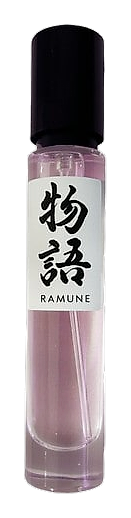
Ramune is a traditional Japanese soda, pale blue glass bottle, sealed with a marble that pops when you twist it open. The moment itself is tactile, almost ceremonial. You don't just open a Ramune. You crack it. Eugene Ti translated that ritual into scent. The brief was simple: capture the feeling of that first fizz hitting your nose in a convenience store in Kyoto or Osaka. Not just the flavor, the whole moment. The excitement of the seal, the sweetness, the carbonation. Ramune the fragrance is that moment, bottled.
What makes this composition interesting is the aldehyde treatment. Those sparkling, champagne-like molecules don't just add brightness, they create the illusion of carbonation. The raspberry and lemonade notes work in tandem with the aldehydes to build something that genuinely smells like opening a cold soda on a warm day. It's a clever trick. The florals that follow aren't decorative, they soften the sweetness, keep it from becoming cloying, and give the fragrance its gender-neutral character. The result is a fragrance that smells like a specific memory to anyone who grew up with Ramune, and like a delightful discovery to everyone else.
The evolution
The fragrance develops on skin, and the notes below describe its composition. A verified duration for its development and drydown is unavailable.
Cultural impact
Ramune occupies a specific niche in the indie fragrance landscape, playful, nostalgic, and unapologetically sweet. It appeals to wearers who want a fragrance that feels like a treat rather than a statement. The Japanese soda inspiration gives it immediate cultural resonance for anyone familiar with Ramune, while the aldehydic treatment makes it interesting enough for fragrance enthusiasts who appreciate clever composition. It's the kind of scent that sparks conversation, people ask what it is, and the answer ('it smells like a Japanese soda') is itself the story.
The House
MonogatariMonogatari is a Russian independent fragrance house founded by perfumer Evgene Ti in 2025. The brand takes its name from the Japanese word for story, reflecting Ti's commitment to narrative-driven scent creation. Monogatari specializes in gender-neutral fragrances inspired by Japanese culture, seasons, and aesthetics. Each fragrance draws from Japanese cultural touchstones while appealing to a global audience seeking distinctive, story-rich perfumes. The brand operates outside traditional retail channels, distributing primarily through direct-to-consumer platforms, which has fostered a dedicated following among niche fragrance collectors.
The Creator
Eugene TiBased on the Monogatari collection, Ti favors a refined, contemplative aesthetic that avoids the maximalist approach common to many niche houses. His compositions tend toward clarity and precision, with careful attention to how individual materials reveal themselves over time.