
The Story
Why it exists.
The beginning
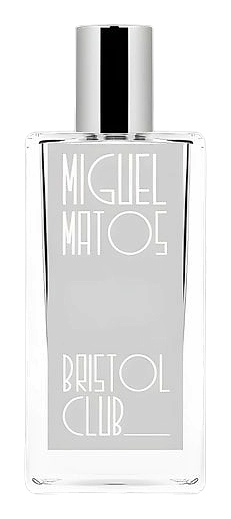
Bristol Club came from a place. Not Bristol, necessarily, but the idea of one: a private room, leather chairs gone soft with use, the particular hush of conversations that have been happening for decades without ever leaving those walls. Miguel Matos named it for that world, the kind of club where private corners hold decades of murmured debate and the air still carries traces of everything that's passed through. Launched in 2020, it arrived as an independent release with a clear point of view. Matos, the perfumer behind it, knew exactly which references to borrow from and which to bend. The composition borrows heavily from classic gentleman's-club perfumery, drawing on the dense, moss-laden structures that defined postwar sophistication without settling into easy nostalgia.
The composition borrows heavily from classic gentleman's-club perfumery, the kind of oakmoss-heavy chypres that defined postwar sophistication. But Matos doesn't just quote the past. He threads pine through lavender to keep things from getting too genteel, and lets animalic notes surface in the base where most modern compositions would have smoothed them away. The orange blossom at the top adds a honeyed sweetness that has no business being this charming next to leather and Peru balsam. It's a deliberate friction, the kind of tension that separates a concept from a copy.
The evolution
The first ten minutes are all brightness and bloom. Orange blossom opens like sunlight through stained glass, sweet and almost soapy, while lemon cuts sharp lines through it. Palisander rosewood adds a polished warmth underneath, the kind of wood that smells like it's been handled by generations of careful hands. Within thirty minutes, the orange blossom deepens into something more like honey on warm skin, and the lavender arrives with its herbal cool, sharpened by pine resin. The heart phase is where Bristol Club earns its name: this is the club, the leather chairs, the conversation that has weight. As hours pass, the oakmoss takes over, dark and earthy, and Peru balsam layers in a sweet resinous warmth. The animalic notes surface last, not loudly, but unmistakably, like a glance across the room. After eight hours, what remains is a skin-close drydown of moss, musk, and that quiet animal warmth. On fabric the next morning, the oakmoss and leather still hold.
Cultural impact
Bristol Club occupies a specific corner of the indie fragrance world: compositions that engage with vintage perfumery traditions without becoming costume pieces. It speaks to wearers interested in chypres and fougères, those structures the mainstream largely abandoned decades ago, but who want a contemporary reading rather than a recreation. The animalic edge ensures it won't appeal to everyone, and that selectivity is part of the draw. In a landscape where most releases chase broad approval, a fragrance that wears its old-school inclinations openly, oakmoss and all, signals a different intent.