
The Story
Why it exists.
The beginning
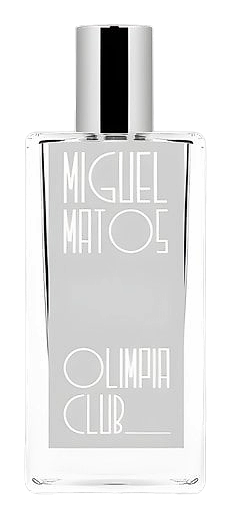
The name Olimpia suggests something Greek and old, ceremony, competition, the moment of victory. But in Matos's hands, victory has a twist. The opening is orange blossom and petitgrain, bright and ceremonial. Each fragrance under his label reads as personal authorship, not product development. Then the composition pivots, moving from pristine florals into something warmer, stranger, and harder to pin down. The orange blossom arrives with a certain clarity, its sweet, slightly indolic character softened by the green, woody nuance of petitgrain that prevents anything from reading as simple or straightforward.
What makes this composition interesting is the structural tension between its opening and its drydown. The top features classic Mediterranean florals, orange blossom, petitgrain, the kind of clean brightness associated with formal occasions. The heart introduces tuberose and narcisse, both white florals with a reputation for being slightly indolic at body temperature. Melon adds sweetness, but beeswax and hyraceum pull in a different direction entirely. Hyraceum, derived from African rock hyrax secretions, is a material most contemporary perfumers avoid. It carries a strong animalic, earthy character that reads as either fascinating or unsettling depending on the wearer's relationship with challenging notes.
The evolution
For the first thirty minutes, orange blossom and petitgrain lead, bright, slightly bitter, a clear opening statement. Petitgrain adds a green, slightly woody undertone that keeps the citrus from reading as casual. Then the florals shift. Tuberose and jasmine arrive creamy and assertive, but they're quickly joined by beeswax and the first hints of hyraceum. The melon in the heart keeps things sweet, but the animalic notes prevent it from reading as purely feminine or dessert-like. By the second hour, the composition has moved decisively into its base. Patchouli provides earth. Amber provides warmth. Tonka and vanilla add a soft, lingering sweetness that rounds the edges without softening them. Hyraceum persists as a low note, present, slightly feral, the kind of element that reads differently on different people.
Cultural impact
Olimpia Club's combination of white florals, beeswax, and animalic notes places it within a lineage of challenging contemporary fragrances that refuse easy categorization. The composition occupies space alongside other fragrances that push boundaries, combining sweetness and warmth with something wilder underneath. It doesn't smell like something designed to please everyone in the room, and that quality makes it memorable.